
The Work Continues

Table of Contents

Three Funds, Many Impacts

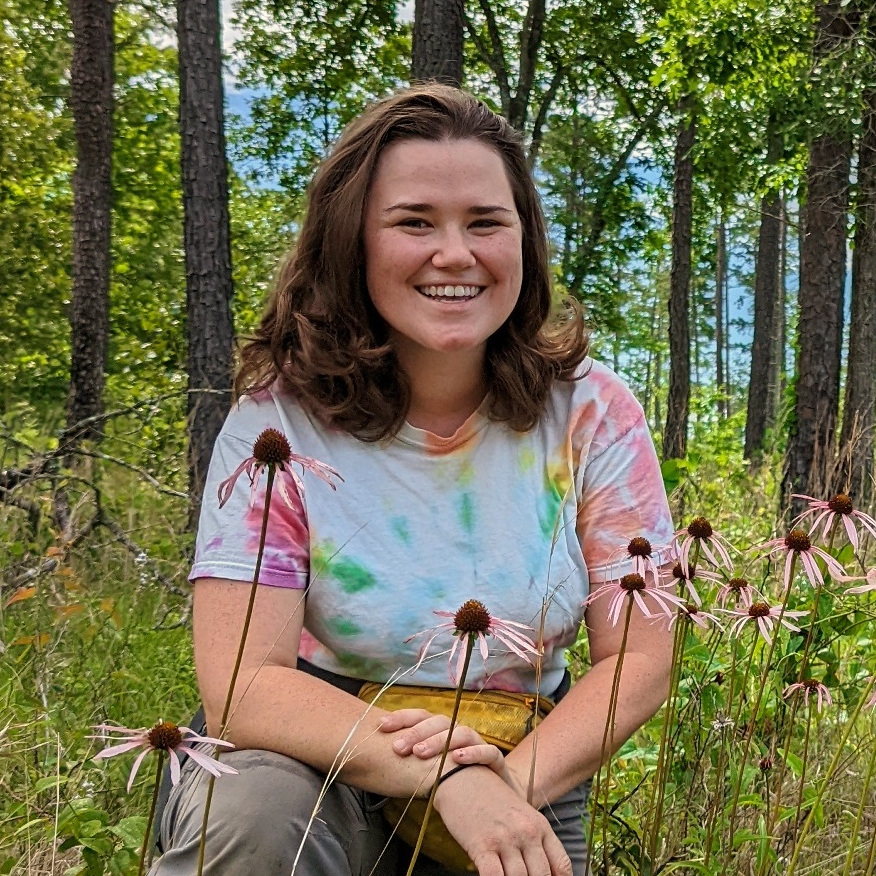
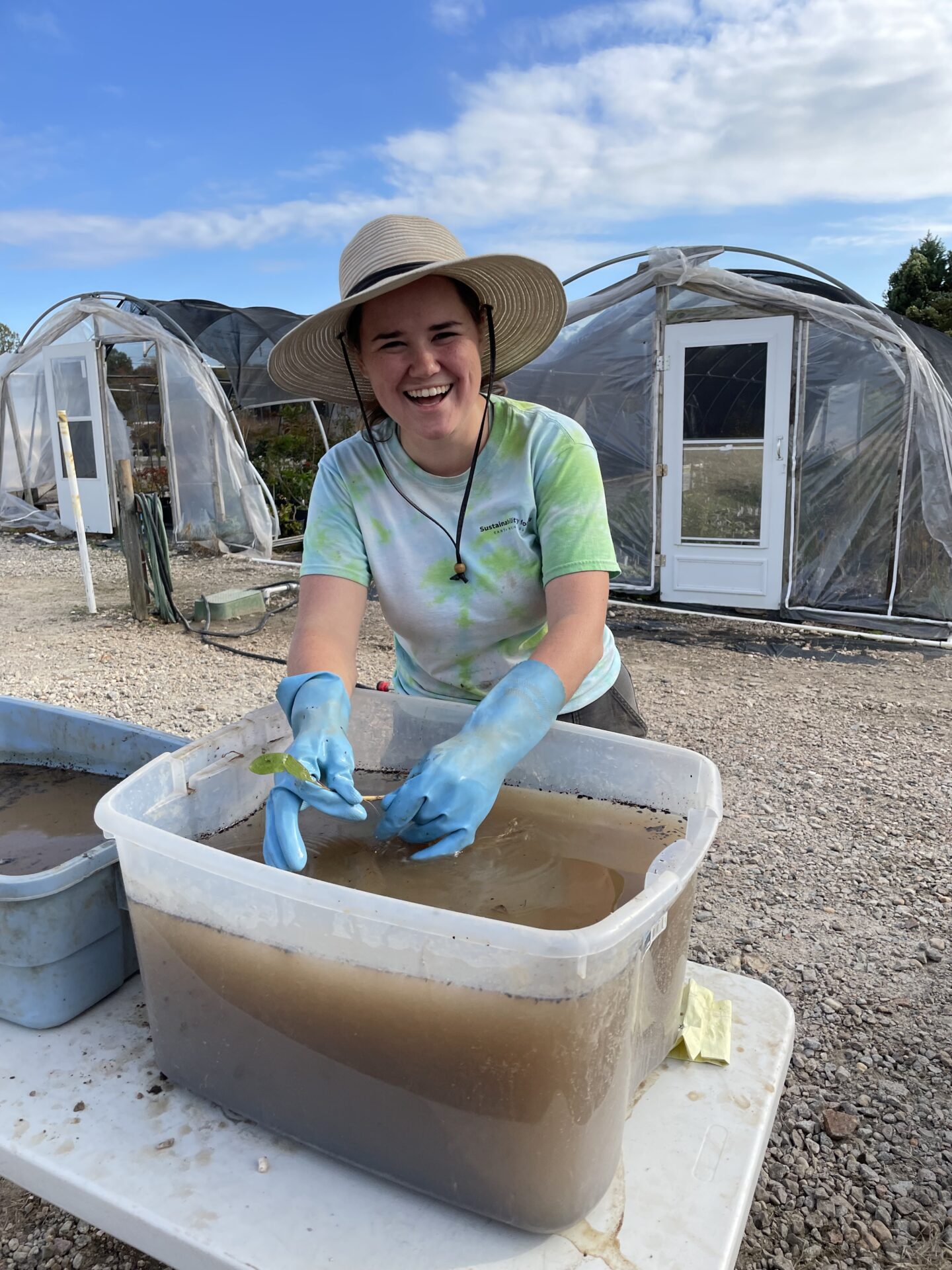
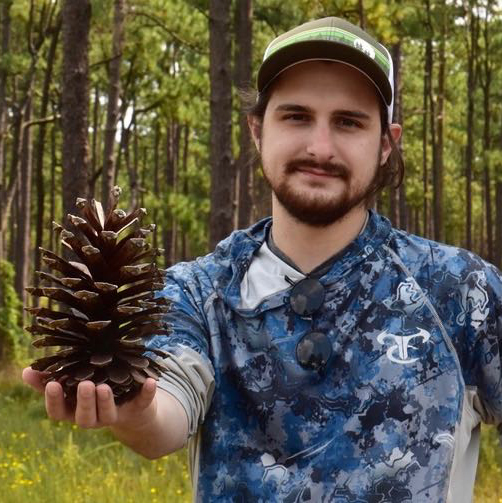
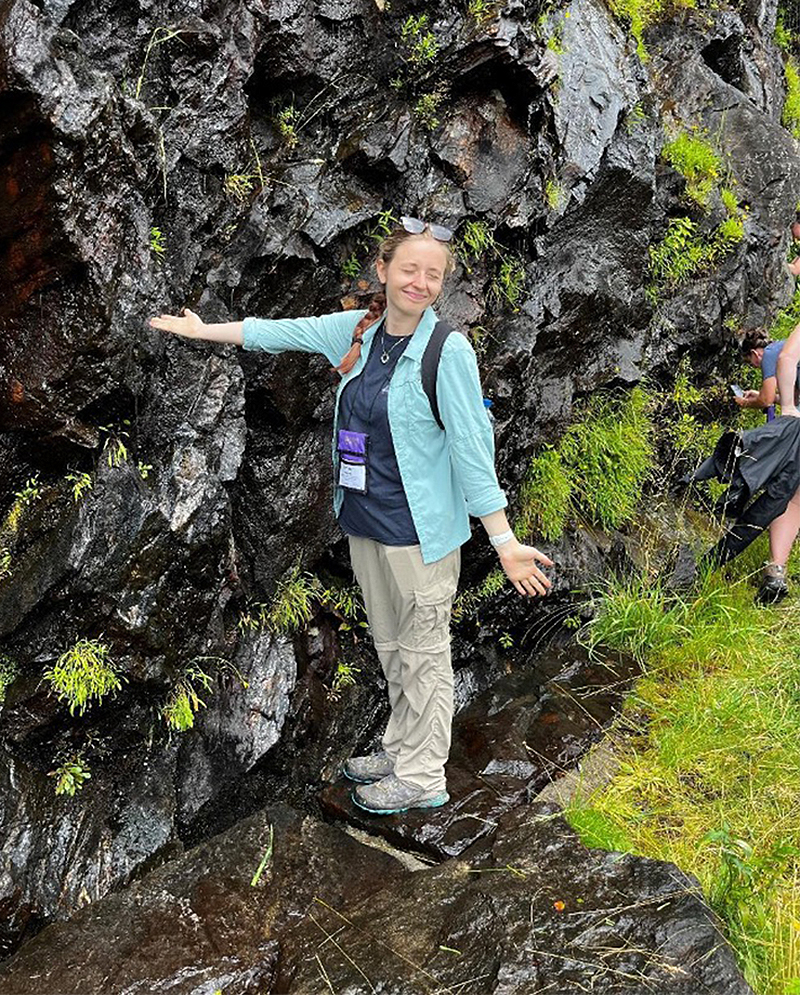
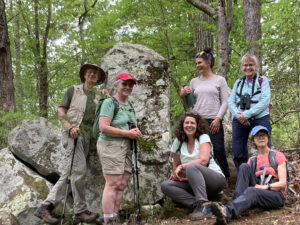
Three Shinn grant alums out in the field in connection with their work at the North Carolina Natural Heritage Program. From left are Merry Conlin in a patch of Purple Milkweed (Asclepias purpurascens), Laurie Hamon in a cypress swamp, and Katherine Culatta counting pitcherplant (Sarracenia) flowers.

By Debra Murray for Native Plant News 75th Anniversary Edition

As we reflect on the history and accomplishments of the NCNPS on our 75th anniversary, we can appreciate the foresight and generosity of the members and officers who helped create lasting sources of support for native plant projects. Since 2002, three funds have been established that now provide yearly grants for student research, land conservation, and stewardship projects across North Carolina.

Tom and Bruce Shinn Fund

Shinn grants are a vital source of funding for native plant research. Since 2002, 67 undergraduate and graduate students have benefited from these grants. The results of their research enrich our understanding of native flora and strengthen conservation efforts. Importantly, student grants also support young researchers as they begin their careers. Four recent Shinn grant recipients are now working with the North Carolina Natural Heritage Program (Katherine Culatta, Laurie Hamon, and Merry Conlin) and the North Carolina Botanical Garden (Brandon Wheeler) helping document, restore, and protect native plants.

Alice Zawadzki Land Conservation Fund

Since 2017, the Zawadzki Fund has awarded 23 grants to help support and protect land across the state. These grants have helped expand state parks, protect watersheds, and conserve sensitive habitats. Recently, with support from a Zawadzki grant, the Piedmont Land Conservancy placed a conservation easement on a riparian habitat in Stokes County helping protect the rare Small-Anthered Bittercress (Cardamine micranthera).

A Zawadzki grant helped protect a tributary of the Dan River where populations of the federally endangered Small-Anthered Bittercress (Cardamine micranthera) are found.

B. W. Wells Stewardship Fund
The B. W. Wells Fund supports stewardship projects throughout North Carolina. This popular grant program plays an important role in helping volunteers with conservation-minded organizations care for natural areas, gardens, and public spaces for future generations. Since 2017, NCNPS has awarded almost 80 B.W. Wells grants to install native gardens, support public gardens, restore parks and neglected places, and expand outreach efforts across the state. One recent grant helped the Daniel Boone Native Gardens near Boone install a rain garden to reduce persistent flooding during severe weather events.

These grants and all they make possible exist because of donations from our members. That generosity reaches far beyond a single project or place. It supports the people, partnerships, and protected landscapes that will carry the mission of NCNPS into its next 75 years.

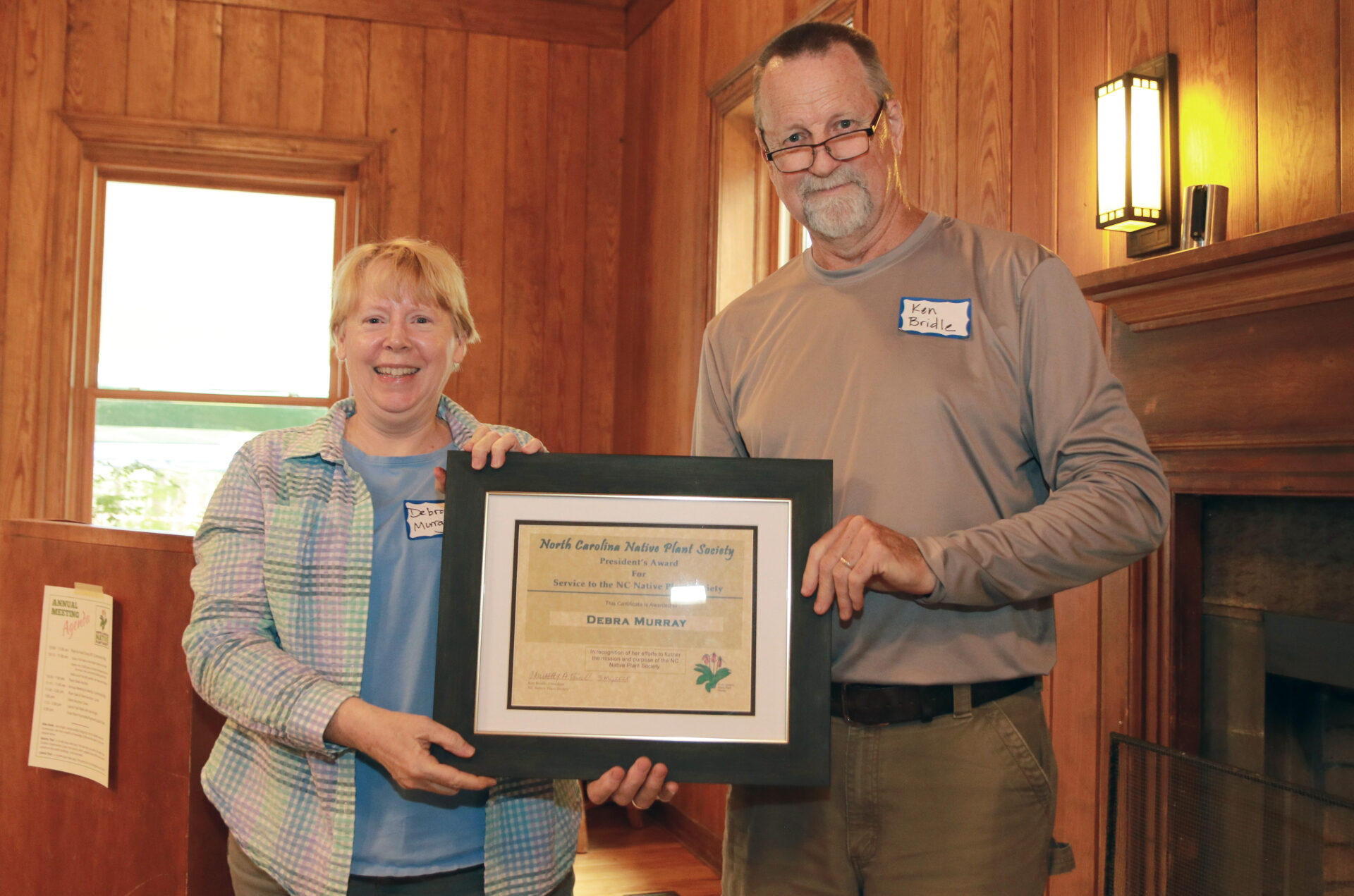
Debra Murray, PhD, is chair of the North Carolina Native Plant Society’s Grants & Scholarships Committee and is responsible for the distribution of the Society’s Shinn Scholarships, B.W. Wells Grants, Alice Zawadzki Conservation Grants, and donations to the Cullowhee Native Plant Conference Scholarships fund. She is a research scientist at Duke University studying the genetics of fungal pathogens.

Saving Plants by Saving Land

By Jean Woods and Nancy Anderson for Native Plant News 75th Anniversary Edition

The North Carolina Native Plant Society conservation work has historically reflected an understanding of what it means to protect native plants. Early preservation efforts such as the Wilderness Act of 1964 envisioned protected landscapes as places where humans themselves were “visitors who do not remain,” as noted by the Act. Thus, early conservation often meant separating people from nature. However, by fostering a network for sharing knowledge, experience, and resources, conservation grew not simply by moving forward but by widening the circle of stewardship.

Since the 1950s, the Society has focused on immediate threats such as dwindling lilies, destructive wildflower collecting, and the loss of a small stand of pyxie moss. This philosophy was reflected in the Society’s conservation ethic that discouraged destructive collecting and in its support of the 1979 North Carolina Plant Protection and Conservation Act, which established a legal framework for safeguarding rare plants.

By the late 1960s, the Society was supporting the acquisition of Stone Mountain, advocating for the protection of Bald Head Island, and contributing to efforts to preserve the Eno River. The initial focus on native wildflowers led the Society toward “conservation of places” with the realization that without habitat, wild flowers would not last.

An example of partnership among various interests is a garden created by Mossin’ Annie Martin, Friends of Gorges State Park, and two NCNPS chapters: The Land of the Sky and Oconee Bell. The plants were rescued from the Edward Baker Preserve of HighlandsCashiers Land Trust and from Gorges State Park roadside ditches.

A garden of mountain community mosses created by partnership. Photo by Nancy Anderson.

By 2000, the Rare Plant Initiative and the formation of the North Carolina Plant Conservation Program demonstrated another stage of maturity: Protecting a plant requires protecting its soils, hydrology, fire regime, pollinators, forests, bogs, rock outcrops, and river valleys. Conservation planning now included legislation, budgets, conservation easements, partnerships with land trusts, and public education. The question evolved from “How do we save this flower?” to “What system must exist so that native plants can thrive?”

Precious native plants in a coastal community are apparent in this photo of the Stanley Rehder preserve tucked behind an elementary school in a residential neighborhood in Wilmington. Photo by Amy Mackintosh.

That philosophy found lasting expression in the Alice Zawadzki Fund. Alice’s legacy gift created a permanent source of support for conservation partners. Relatively modest grants for appraisals, surveys, baseline inventories, or management plans have helped make possible the protection of hundreds—and sometimes thousands—of acres.

Today the Society’s chapters continue that evolution by helping native plants flourish where people live. Gardens, neighborhoods, schools, and communities have become important places for conservation. As conservationist Julie Moore observed in describing a town where Venus flytraps grow in yards, “Regulations and rules don’t save a species. It’s people. And these are the people who live among flytraps.”

The Society’s native plant stewardship journey has grown from protecting individual plants to conserving entire ecosystems—and now to empowering regional chapters, noted by Charley Winterbauer, SE Coast Chapter co-chair, in an article about partnerships that create places where people and native plants flourish together. That is growth.

Jean Woods is a graduate of the Certificate in Native Plant Studies program at UNCC and involved in its establishment. She is a past and current president of the NCNPS, and served on the board of the Catawba Lands Conservancy and the Friends of Plant Conservation. 

Nancy Anderson is a founding member and outgoing chair of the Oconee Bell Chapter; a certified Transylvania County Master Gardener, and Purdue University Professor Emerita of Biology.

Lorem ipsum dolor sit amet, consectetur adipiscing elit. Ut elit tellus, luctus nec ullamcorper mattis, pulvinar dapibus leo.

Expanding Advocacy to Influence Policies

By Karen Rindge for Native Plant News 75th Anniversary Edition

While the NC Native Plant Society has always worked to protect and plant native plants in a variety of ways across North Carolina, Society members are currently organizing to advocate more strategically for expanded public policies that promote native plants and restrict invasive species. What we each plant in our gardens is so important for creating healthy habitat; however, we can be more influential in ecosystem expansion by urging elected officials to pass policies in our towns, cities, counties, and state that encourage and/or require the planting of non-invasive native plants. More land planted with native plants and trees means much more habitat for wildlife and for carbon sequestration.

The good news is that we are seeing real progress across the state! In the last few years, state legislation and Governor Roy Cooper’s Executive Order 305 are moving the needle to require more planting on state property and highways. Municipalities, too, have passed a variety of policies and approved funding for pollinator plantings and invasive removal. Thanks to efforts from our Society members in places like Greensboro, Emerald Isle, and Raleigh, city officials have responded with new policies! Some towns are issuing recommended native plant lists for developers and homeowners. Some towns are requiring a minimum landscaping goal on public property of 50% to 70% native species. Your voice really can make a difference in influencing positive change!  

There is much more to do, including restrictions on planting and selling invasive plants. So, the Society has organized the new Advocacy Committee to engage our chapters and members as vocal advocates for helpful policies in their own towns and in the NC General Assembly. The Advocacy Committee already has members from across the state and welcomes new volunteers to join virtual meetings. The Committee has created an Advocacy Tool Kit as a guide for communicating with elected officials, and hosted a workshop at the 75th Anniversary Celebration. 

If interested in being an advocate, please see our webpage or contact Karen Rindge, Advocacy Chair, at advocacy@ncwildflower.org.

Karen Rindge, a landscape designer certified in rain garden design and stream bank repair, received horticultural training at NC State University and is passionate about sustainability through years of community outreach and advocacy and her past work with WakeUP Wake County and the National Wildlife Federation. Karen chairs the Advocacy Committee of the NC Native Plant Society and is on the board of the North Carolina Arboretum.