Revelations of an Ecological Gardener: Some aha moments!

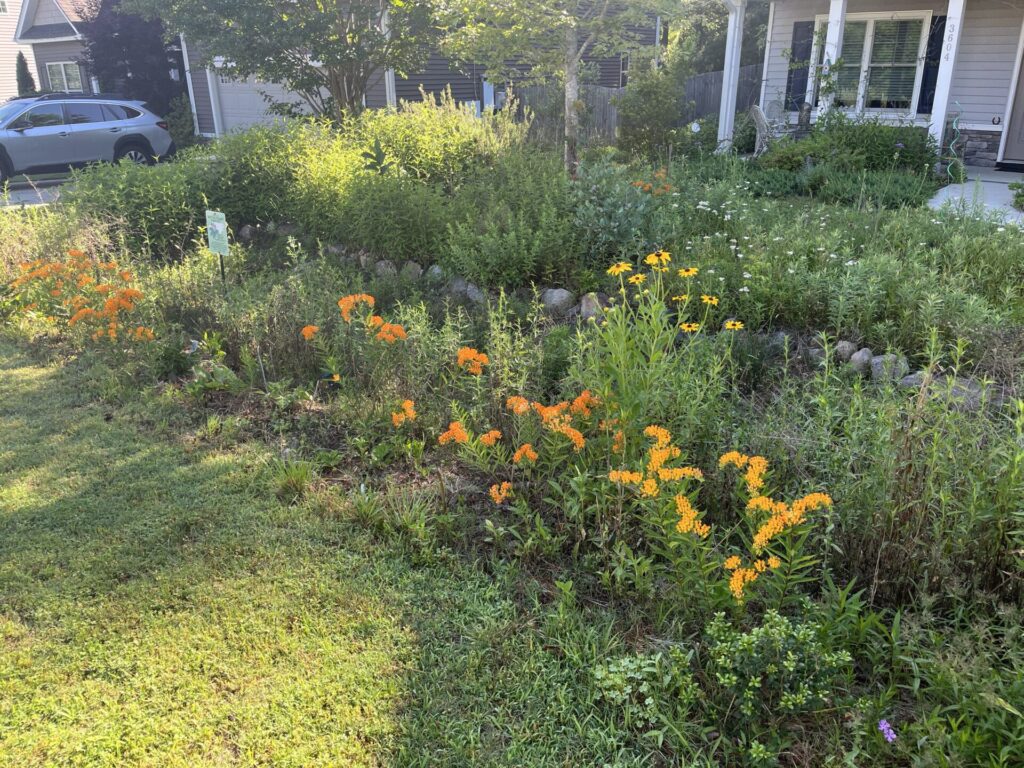
A front yard of many types of native plants is helping birds and other wildlife to the best, nutritious, and safe food year-round.

Text and photos by Susie Colman reporting for Native Plant News Spring 2026

Nothing gives me greater hope than gardening for wildlife.

Being a member of the NC Native Plant Society has helped me realize that it’s not about growing plants to fill a landscape, but rather, growing plants that are essential for the survival of all the insects, bugs, birds, amphibians, mammals – all of wildlife. I have seen unchecked alien invasive Kudzu and Japanese Honeysuckle strangle and break off tops of good sized trees.

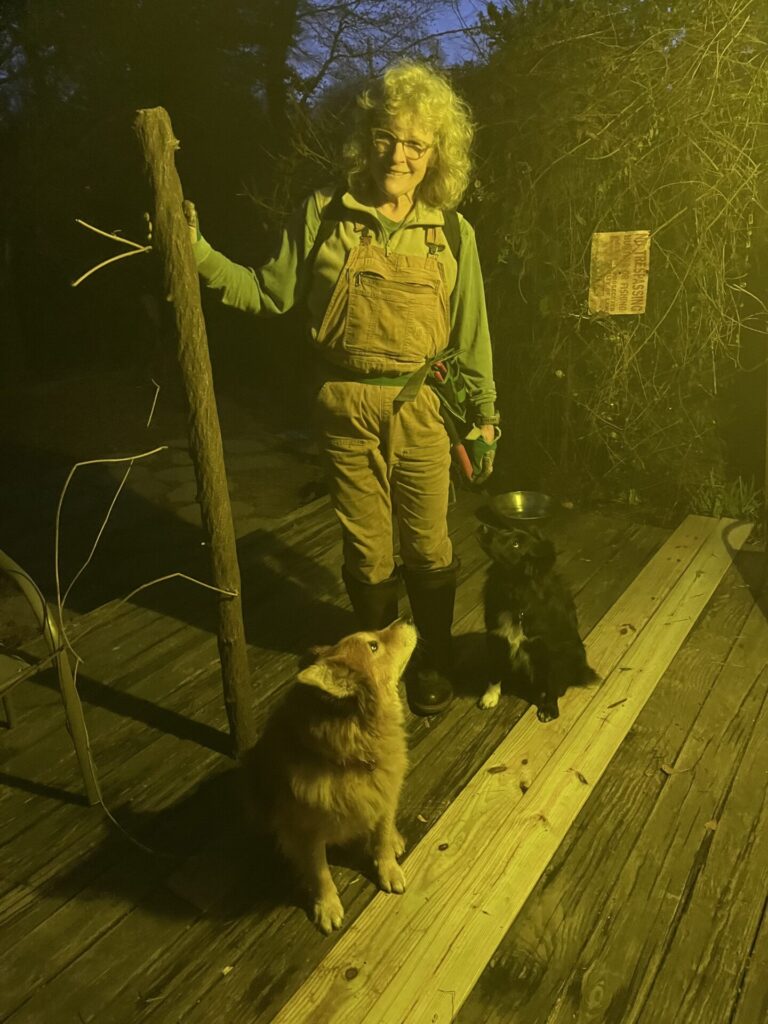
Standing under a yellow porch light, recommended by Doug Tallamy, are Susie Colman and her assistants with a defunct non-native invasive Kudzu vine (Pueraria montana).

But I see so much life in my yard since I have reduced the lawn with native plants in its place. My front yard now has ten plus Eastern Butterflyweed (Asclepias tuberosa), three and four Cutleaf Coneflower (Rudbeckia laciniata) and Common Eastern Coneflower (R. fulgida), three to four Obedient-plant (Physostegia virginiana), three Mistflower clumps (Conoclinum coelestinum), several dwarf Yaupon (Ilex vomitoria), several Golden Ragwort (Packera aurea), three hybrid blueberry shrubs (Vaccinium sp.), Blue and Downy Phlox (Phlox divaricata and P. pilsoa) and Mouse-ear Coreopsis (Coreopsis auriculata) as groundcover, numerous volunteer Frost Aster (Symphyotrichum pilosum), clumps of Scarlet Beebalm (Monarda didyma), as well as Eastern Yarrow (Achillea gracilis) that has spread all over, a big clump of Aromatic Aster (Symphyotrichum oblongifolium) and Amsonia (Amsonia tabernaemontana), Tall Goldenrod (Solidago altissima var. altissima), Mountain-mint (Pycnanthemum muticum), several spreading areas of Small-headed Sunflower (Helianthus microcephalus),three Blazing-star (Liatris spicata), 

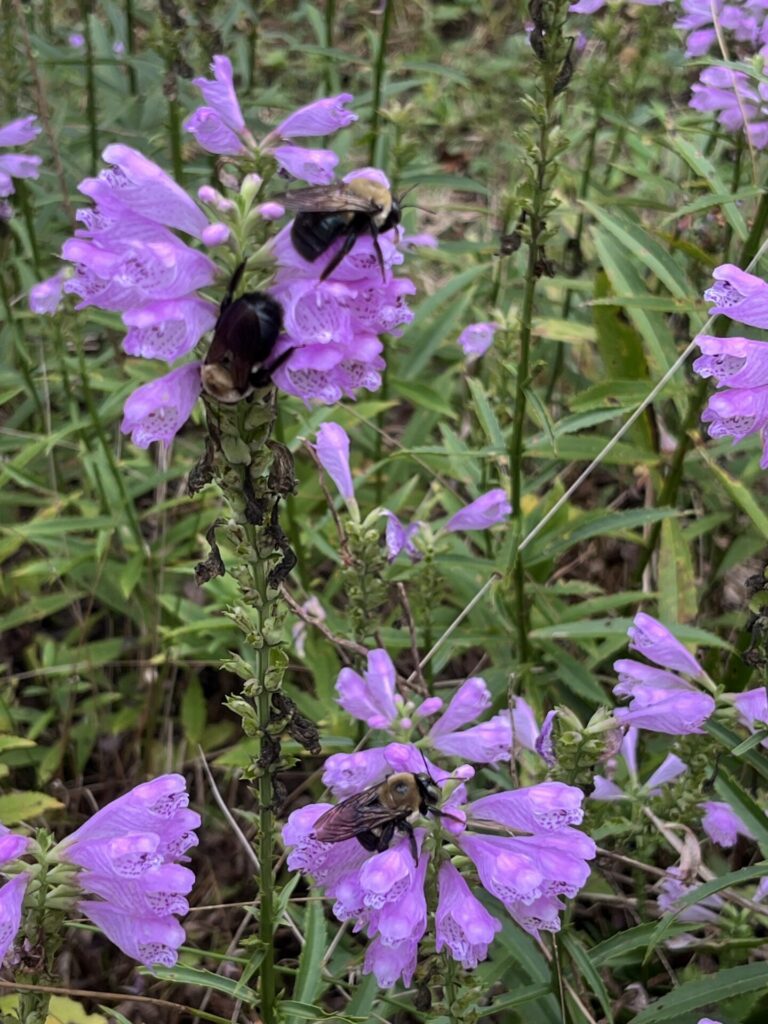
Obedient plant (Physostegia virginiana) and bees.
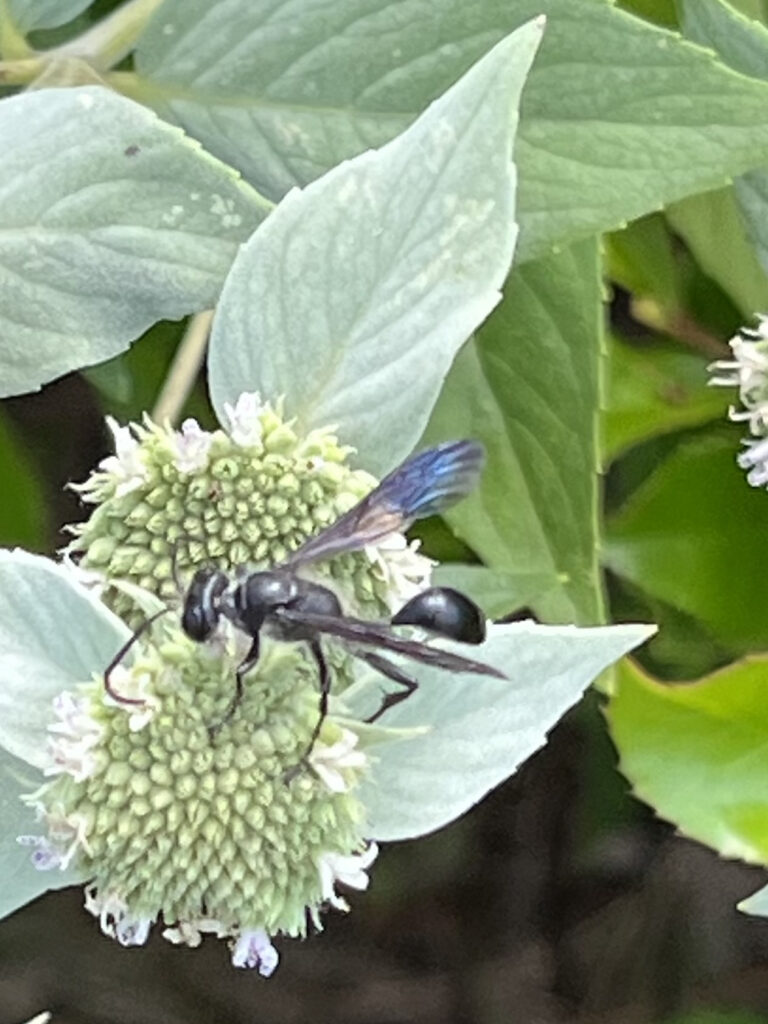
Mountain mint (Pycnanthemum muticum) with small grass carrying wasp.
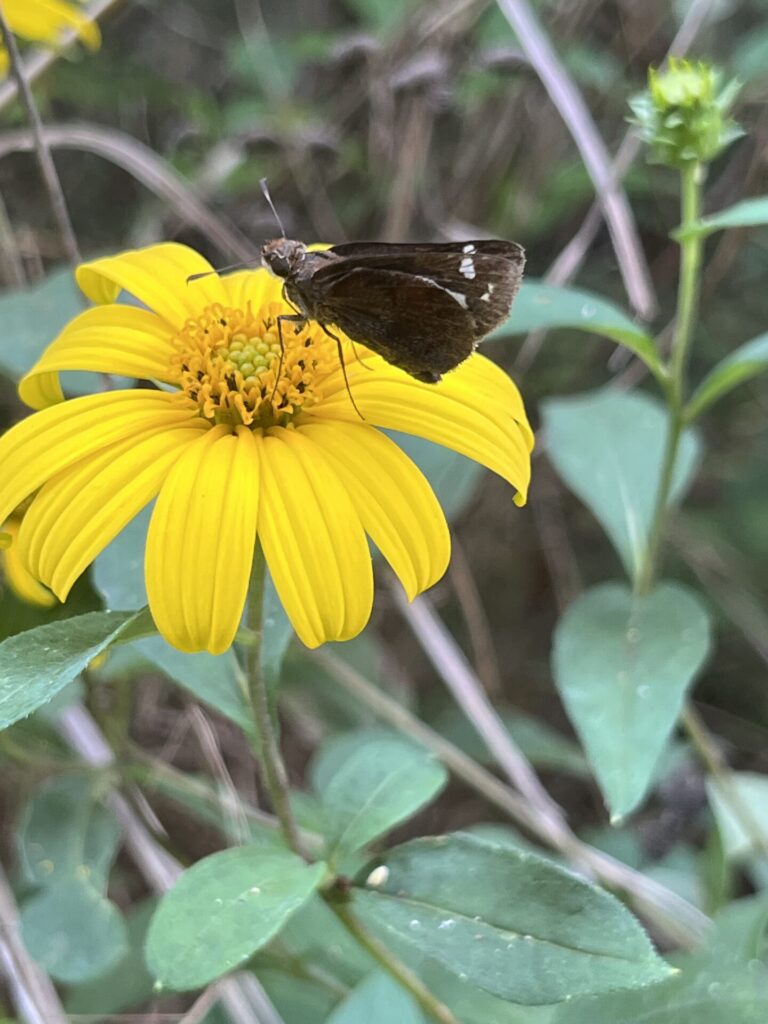
Small-headed Woodland Sunflower (Helianthus microcephalus) with Zabulon.
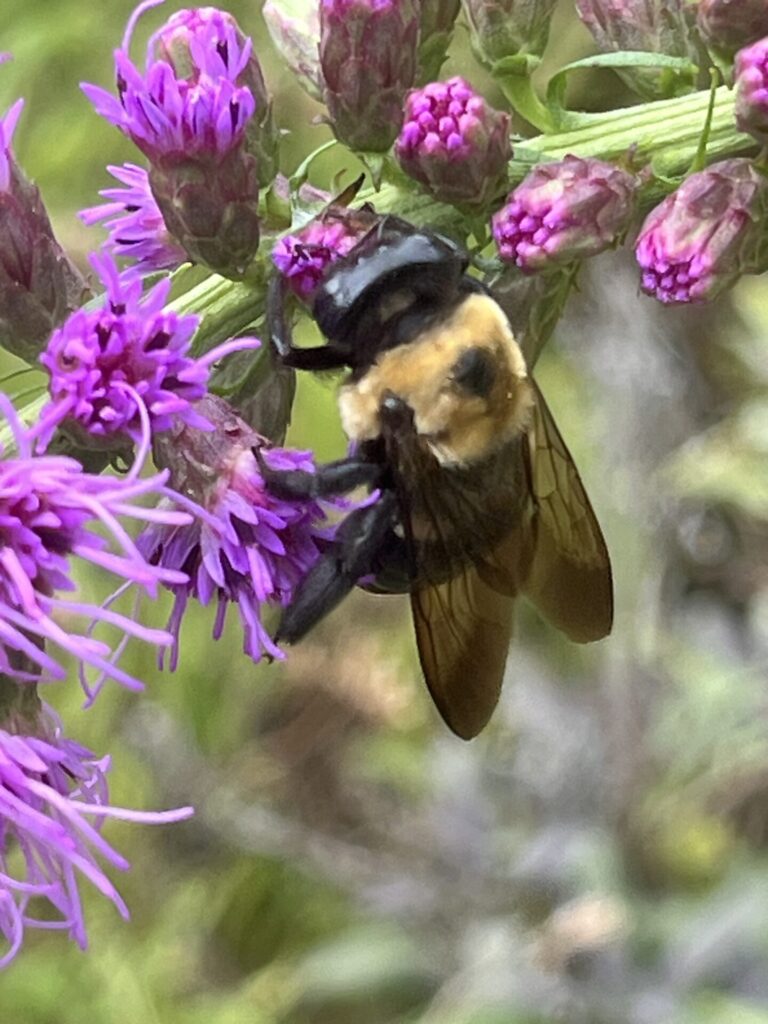
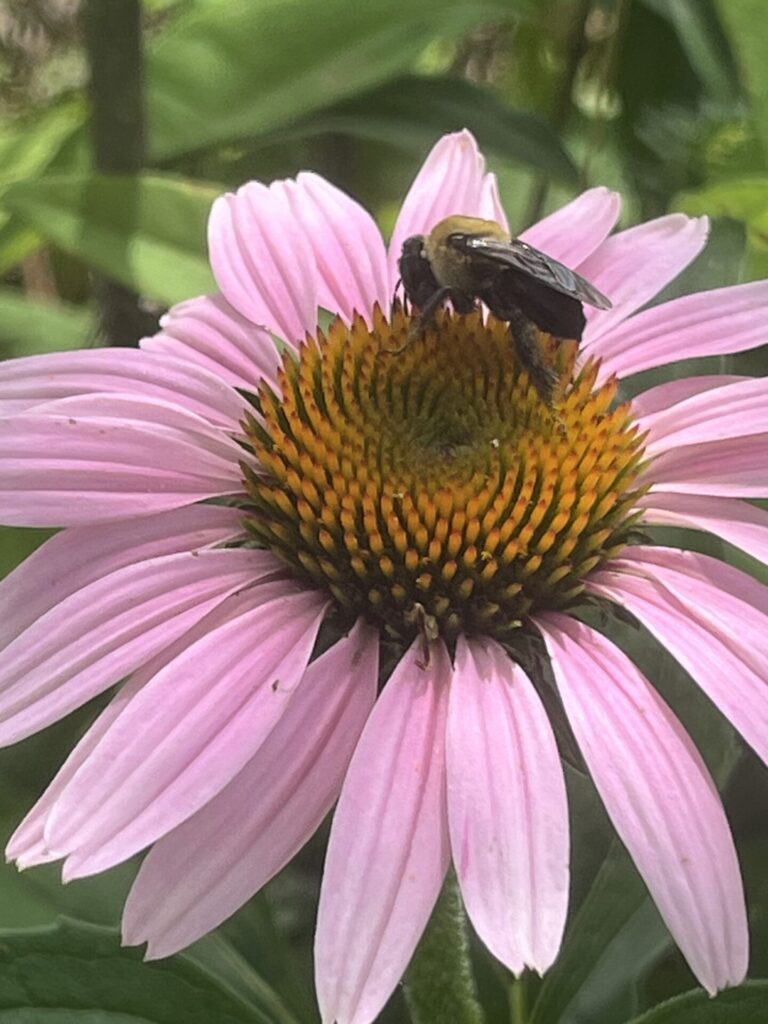
Eastern Carpenter Bee (Xylocopa virginica) on Blazing-star (Liatris spicata). skipper (Poanes zabulon).

and three Northern Rattlesnake-master (Eryngium yuccifolium var. yuccifolium) and numerous Canada Columbine (Aquilegia canadensis) happily seeding wherever they feel like it!

Rattlesnake master (Eryngium yuccifolium) with carpenter bee.
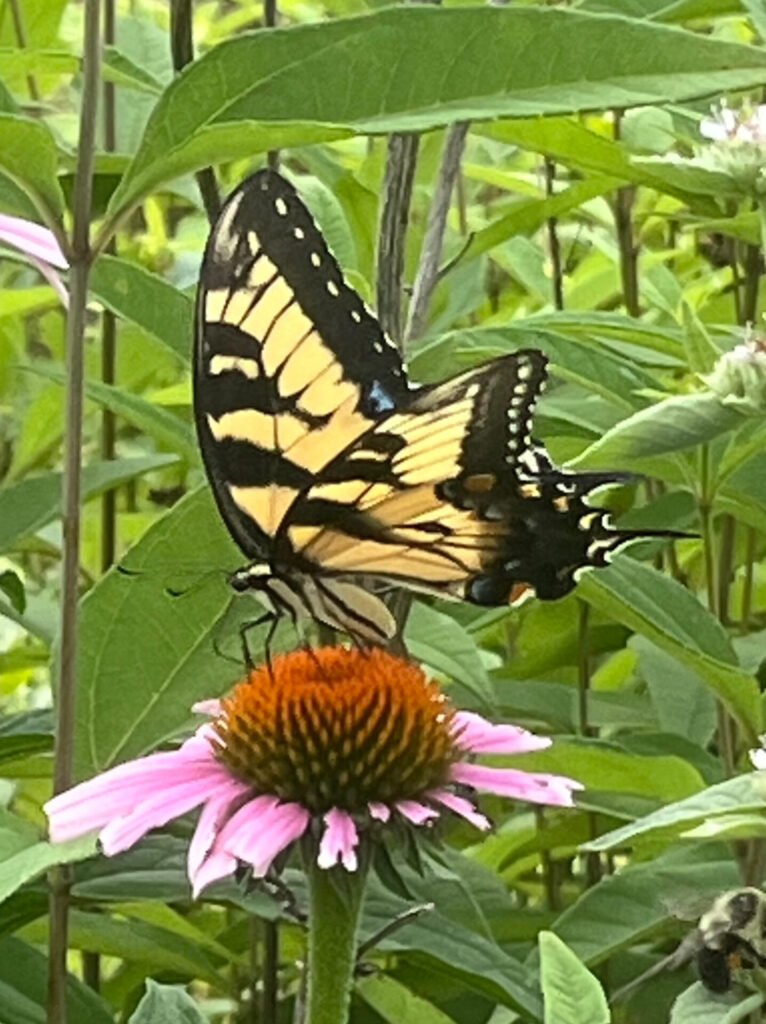
Eastern Tiger Swallowtail (Papilio glaucus) on Narrow-leaf Coneflower (Echinacea angustifolia).
Narrow-leaf Coneflower (Echinacea angustifolia).

A few of my revelations

Planting native plants in your yard is a fairly safe pastime. According to the esteemed national authority on native plants, Dr. Douglas Tallamy, “Your kitchen might be more dangerous than your yard; toasters cause 300+ deaths per year, as opposed to five to ten snakebites a year.” I do keep Technu wash handy for Poison Ivy encounters, though.

Dr. Tallamy and many of us know “if you remove it (non-native invasives), they will come.” Once I began removing non-natives, I saw Red-shouldered Hawks nesting, Wild Turkeys trotting through, bluebirds checking out housing availability, Turkey Vulture migration passing by at Thanksgiving, and so many native plants just waiting to reclaim their space.

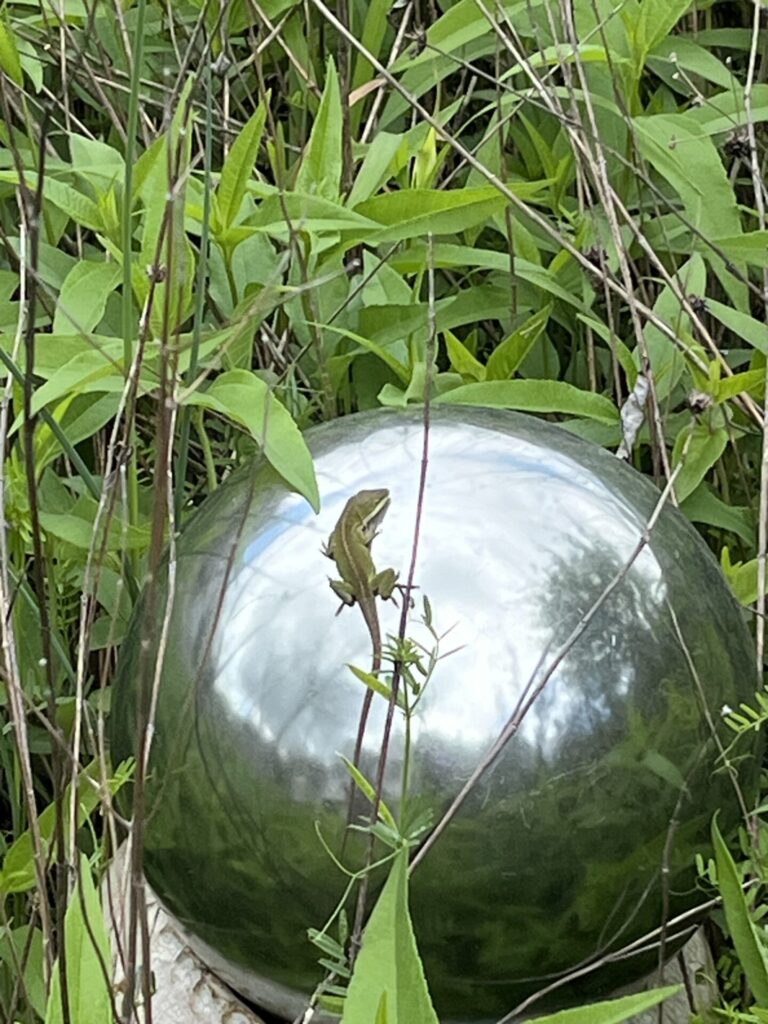
Jerusalem artichoke (Heliananthus tuberosus) with green anole.

Nandina (Nandina domestica) berries are the great pretenders! Eaten in large numbers, they are poisonous to birds, not at all what I was told when I planted them (horrors!) feeling good about helping wildlife! In place of Nandina, there is beautiful Winterberry Holly (Ilex verticillata + Ilex laevigata) (or Inkberry [Ilex glabra], Gallberry [Ilex coriacea], or American Holly [Ilex opaca]) for the best, nutritious, and safe bird food in winter.

Goldenrod (Solidago spp.) is the falsely accused enemy flower of the plant world. It has been blamed for so many allergy woes, while ragweeds (Ambrosia spp.) are the real culprits, but don’t take the blame. Goldenrod is a top keystone species, the hero of so many insects and so beautiful in the fall. But to be fair, native ragweeds do have some benefits for native wildlife.

Nature is not someplace else, it’s in your yard! When I see all the land being clear cut around where we live in Wake County, it makes me realize I can control one place. I don’t have to be a bystander.

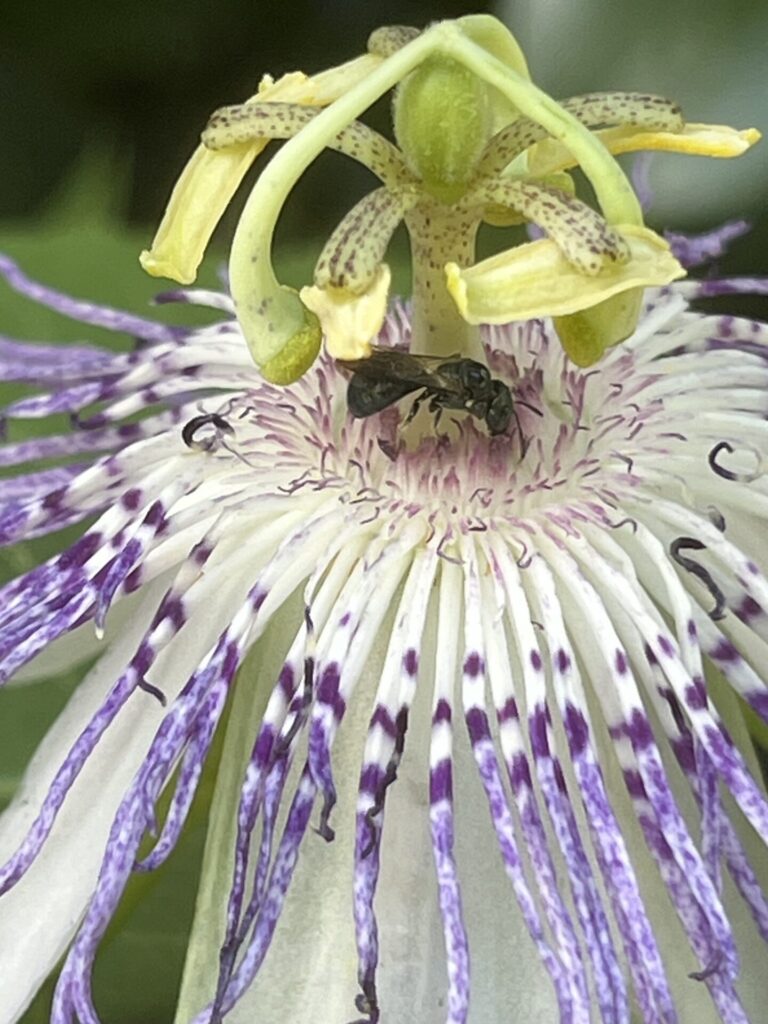
Passion flower (Passiflora incarnata) with Carpenter Bee.

I do not have a science background at all, being more of a humanities person who stumbles bashfully over botanical names. Today, thanks to so many researchers, so much more is known about the special relationships between native plants and the life they give to the next level of eco systems, that we can all do something without being brilliant in chemistry (my nemesis). The Monarch/Milkweed relationship is any example that elementary school children can understand. I realized one day that humans can eat almost any kind of food from all over the world, like Italian, Asian, and Mexican — but bugs and other native wildlife have not been importing their food or migrating from continent to continent like us human species. The very long-term resident species of our wildlife have just hitched their wagons to local, native fare.

I do disagree with Dr. Tallamy on one issue. There ARE Martians on my HOA (Home Owners Association), as a few of these people who represent other Martians in the ’hood do not seem to understand life on this earth. There is such fear of the unknown, or that to plant native would invite all the starving roaches inside their houses and would halve the value of their homes. I grow natives in my front yard because the back yard is a pocket forest with a lot of dry shade. So my front yard is not as tidy as a lawn, but it is so much more alive than other yards! Watching all the bugs, butterflies, and birds is  better than cable TV. I have been working to remove Kudzu, privets (Ligustrum spp.), Multiflora Rose (Rosa multiflora), and Japanese Honeysuckle (Lonicera japonica), and am probably not ever going to win against Japanese Stilt-grass (Microstegium vimineum) in the community property that is a riparian buffer. When people see me working near the road and ask me, aren’t you afraid of snakes, I really should tell them it is much safer than my kitchen. I have never seen even one toaster in the woods.

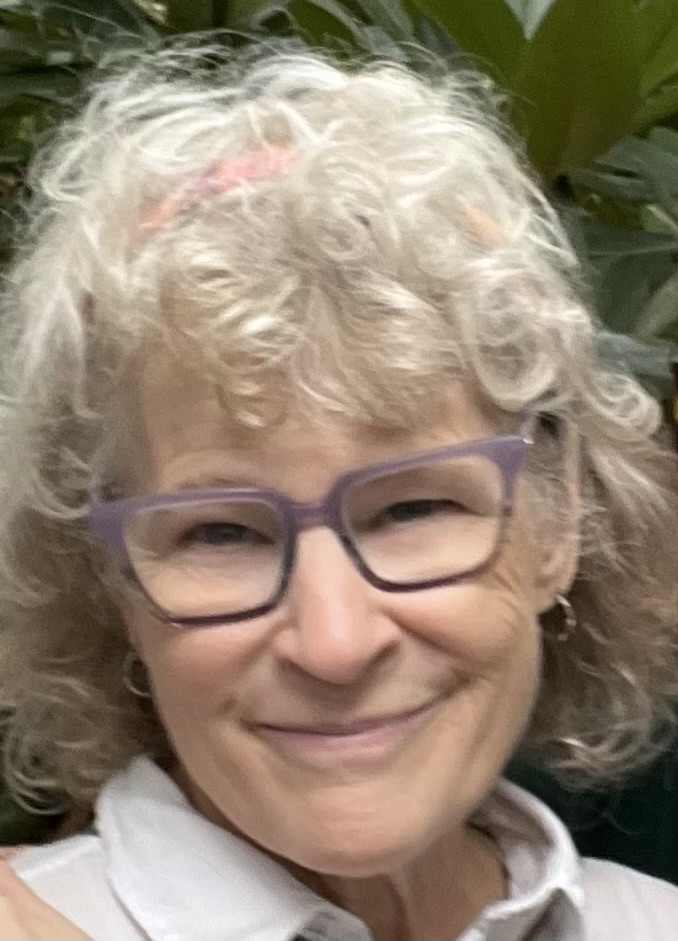
Susie Colman is a part-time librarian, full time native plant enthusiast and invasive plant assassin, and a member of the NC Native Plant Society living in Wake County, NC since 2014.