
The Sandhills is one of the most biodiverse eco-systems in the World. It supports 40% of the biodiversity in NC in just over 1 million acres.
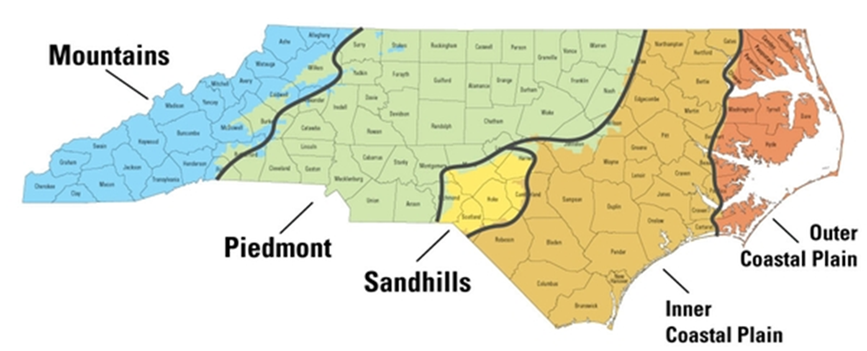
- The Sandhills is characterized by rolling topography, sand covered clay soils (different levels) and thousands of stream heads and this ecoregion is not usually included on maps of the state’s ecoregions (Mountains, Piedmont, Coastal Plain).
- When most folks, even professional biologists, think of “Coastal Plain”, they think of the eastern portion, near to the estuaries and to Outer Banks. But the Sandhills is usually overlooked as a distinct part of the Coastal Plain.
- There are a good number of plant species endemic (restricted) to the Sandhills of NC-SC-GA, and others that in NC occur only in the Sandhills. Soils are different here than on the flat portion of the Coastal Plain.
- Moreover, there is a longer history of controlled burning here than elsewhere in NC because of the Longleaf Pine and wiregrass ecosystem that requires fire.
Chapter Events
Sandhills Counties
- Anson
- Cumberland
- Harnett
- Hoke
- Lee
- Montgomery
- Moore
- Richmond
- Scotland
*This map uses the US Forest Service/Bailey’s Ecoregions definition
Contact Us
UPCOMING FIELDTRIPS
EDUCATIONAL EXCURSIONS
Pyxie Moss Lighting Up the Sandhills
PYXIE MOSS POP UP March 9th, 2026
A nature walk to find the rare blooming pyxie moss
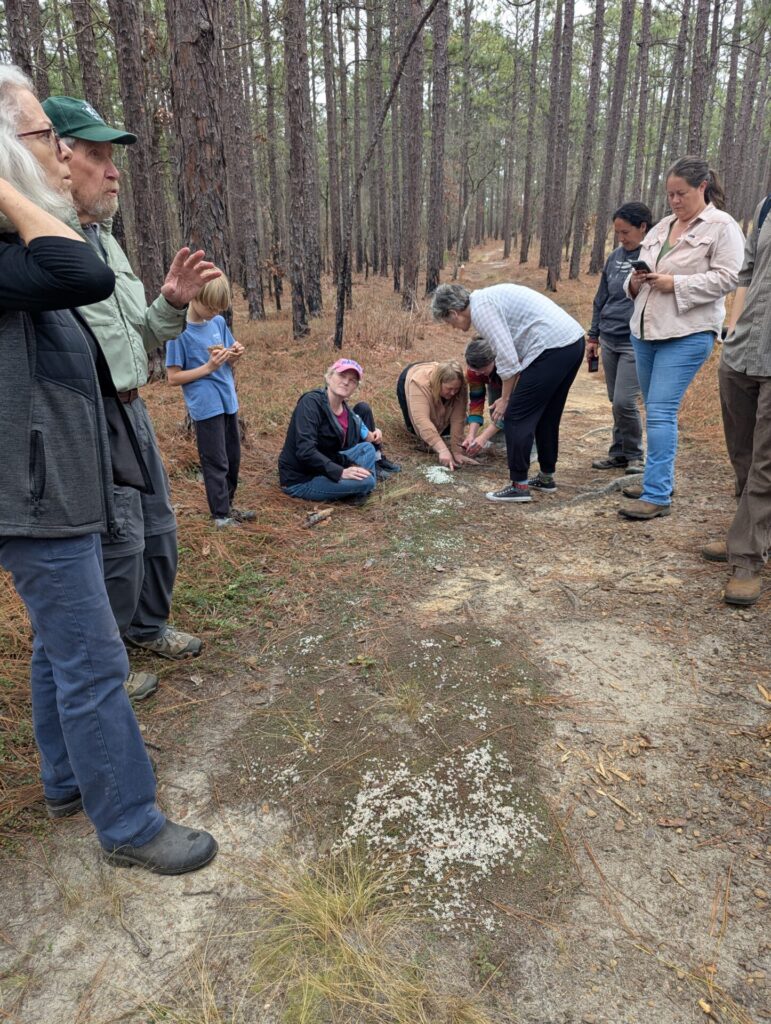
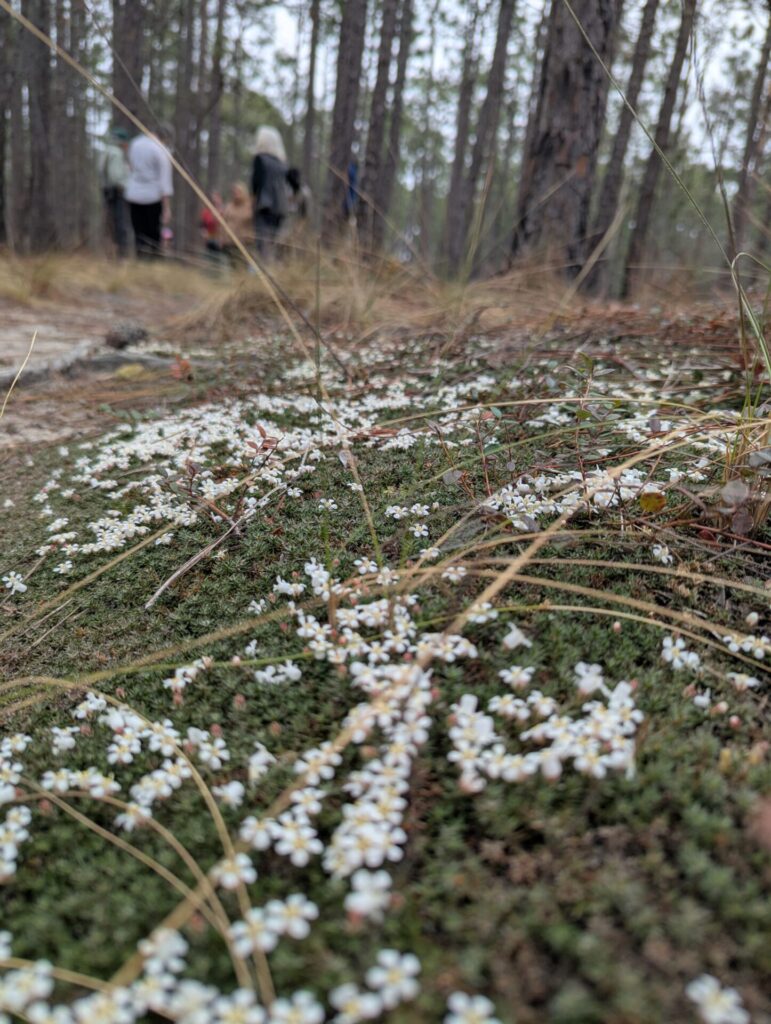
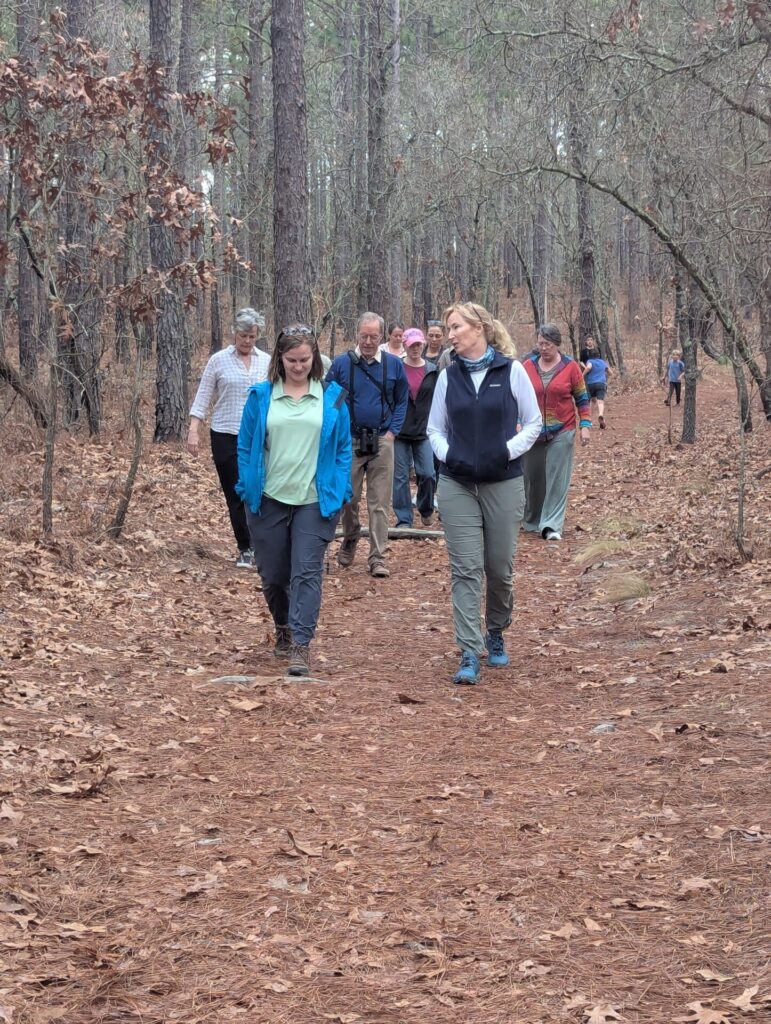
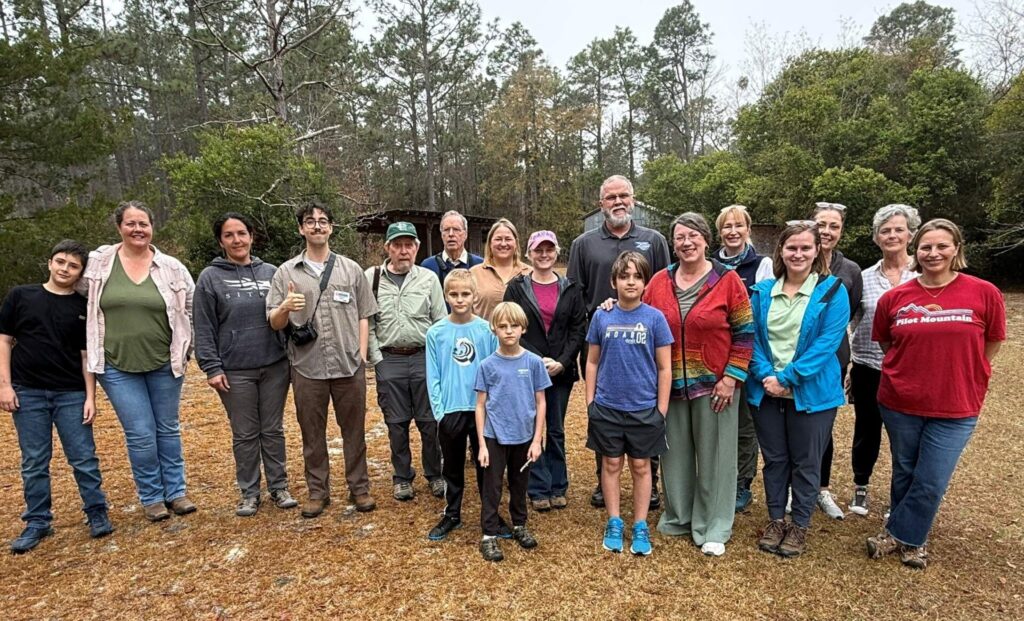
We went on a “pop-up” nature walk to find the rare blooming Pyxie Moss. It’s not actually moss, but it is magical!
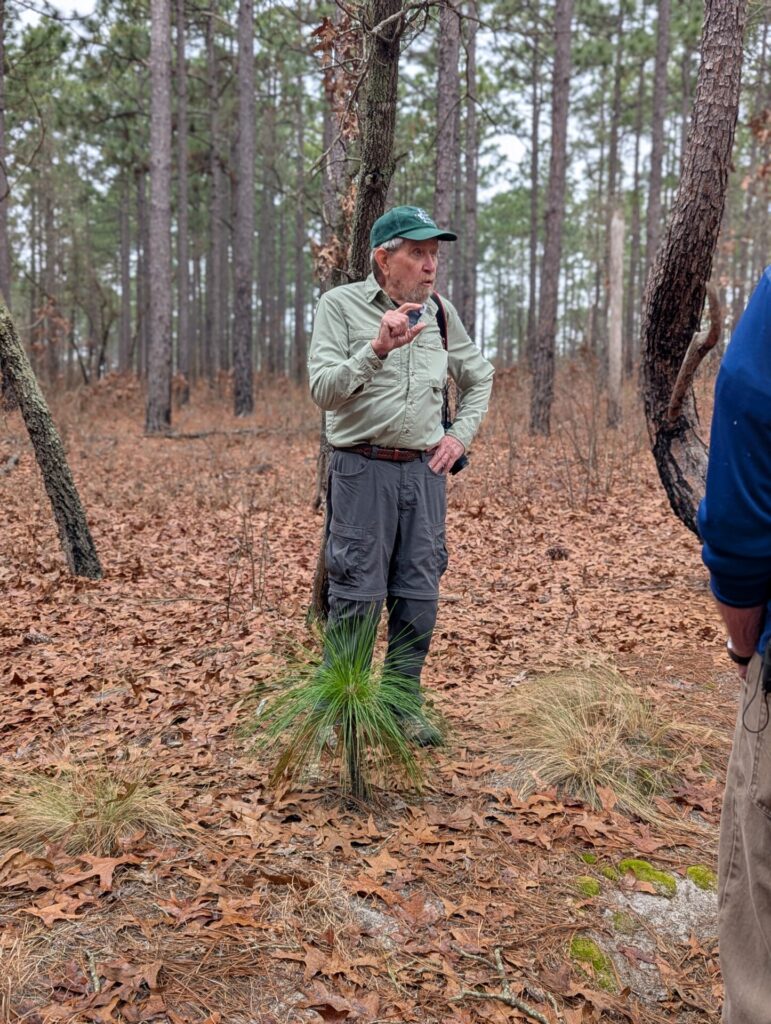
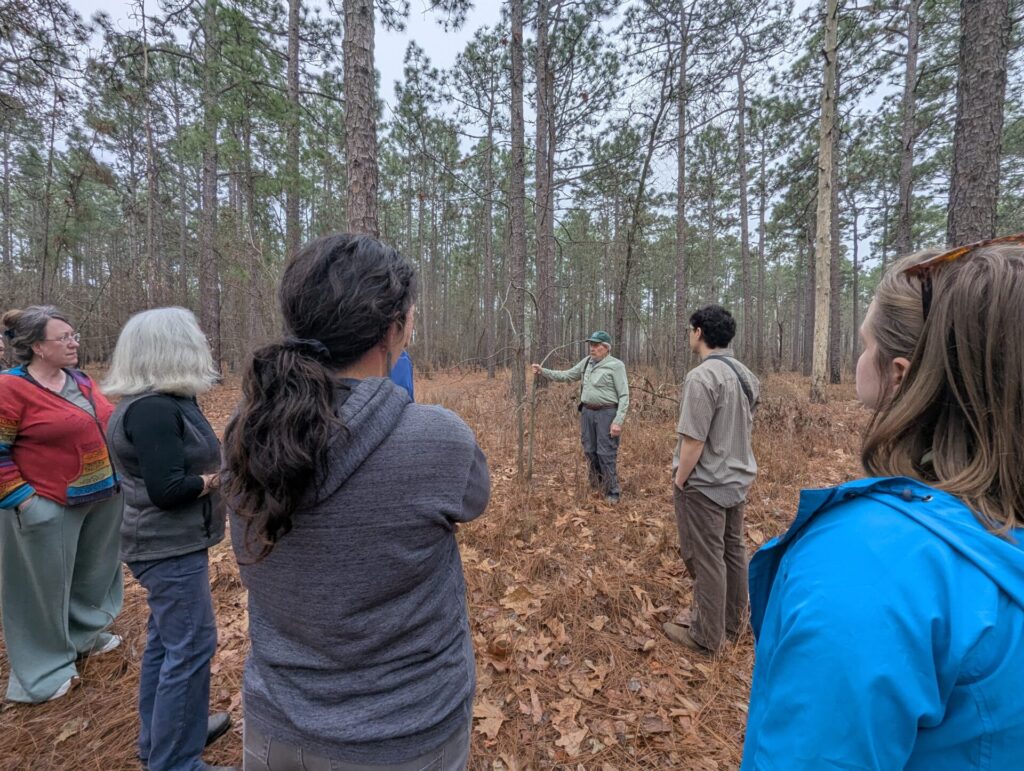
Where: Pyxie Moss Trail /Paint Hill Tract of the Weymouth Woods Sandhillls Nature Preserve led by Bruce Sorrie.
What: Sandhills pyxie-moss (Pyxidanthera brevifolia), which blooms in winter, grows beneath the longleaf pine forests.
History of the North Carolina Native Plant Society & Pyxie Moss
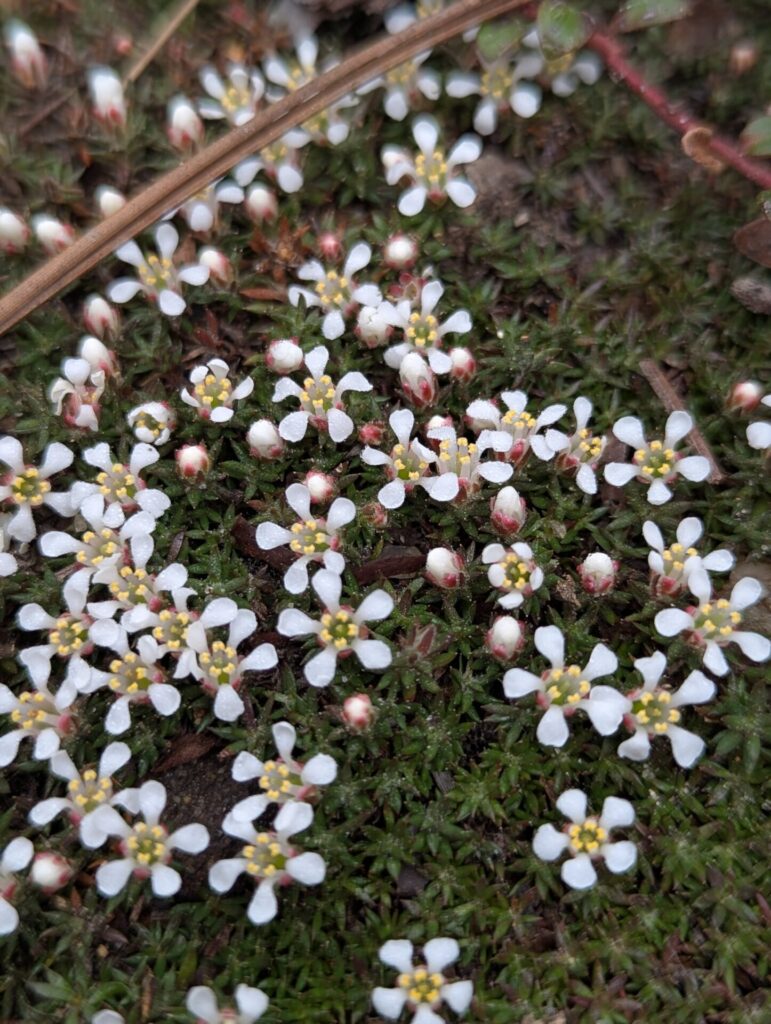
The early history of the North Carolina Native Plant Society was marked by strong efforts in conservation and the creation of native plant gardens across the state. One of its primary goals was protecting habitat for Pyxie Moss in the Sandhills and supporting the Daniel Boone Botanical Garden in Boone. A major reason the organization chose to become incorporated was to gain the ability to acquire land to protect the endangered Pyxie Moss. However, by 1958, the effort to secure land for its protection had fallen through. Pyxie Moss is a rare, tiny flowering plant—despite its name, it is not a true moss. It is found almost exclusively in the Sandhills region, primarily in Moore, Harnett, Hoke, and Cumberland counties, and has not been recorded in the southern Sandhills counties of Richmond or Scotland. This narrow endemic species occurs only in North Carolina and adjacent South Carolina. Although its range is very restricted, it is relatively common on Fort Bragg. The plant grows in sandy soils over clay hardpans, typically on ridges and hilltops. Blooming from February into March, Pyxie Moss is a small evergreen sub-shrub that grows flat along the ground in dense mats that can spread several feet across. Its needle-like leaves are tiny—barely one-eighth of an inch long—and densely cover the stems. In bloom, the plants are covered with small white flowers about a quarter inch wide, so abundant that the patches can resemble snow on the forest floor. Because of its small size, spotting Pyxie Moss requires careful observation—often kneeling or even lying down to fully appreciate it.
BOOTHS at LOCAL EVENTS and FESTIVALS
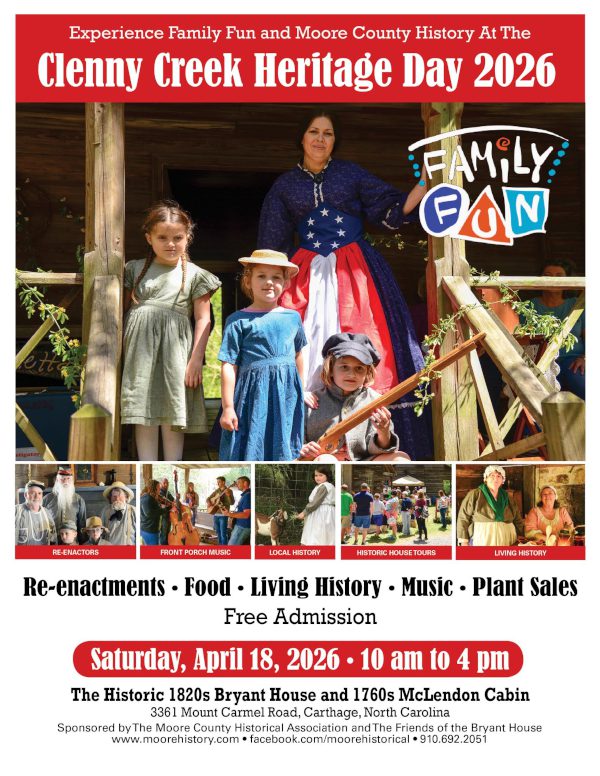
CLENNY CREEK HERITAGE DAY 2026 APRIL 18TH @ 10AM-4PM Free Event
The Historic 1820’s Bryant House and 1760’s McLendon Cabin – Oldest dwelling in Moore County Location: 3361 Mount Carmel Road, Carthage, North Carolina
PARTY FOR THE PINE / FIRE FOR THE FOREST APRIL 18TH 10am-3pm
The oldest known living longleaf pine in the world resides here, dating back to 1548
Free event -Weymouth Center for the Arts & Humanities 555 East Connecticut Avenue Southern Pines, NC
https://friendsofwewo.org/party-for-pine-2026