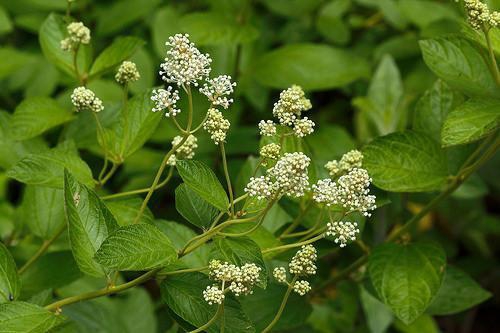
Mountain Snowbell/New Jersey Tea (Ceanothus americanus). Photo by Tom Potterfield CC BY-NC-SA 2.0
By Robert Carter reporting for Native Plant News Winter 2025
As a child and as an adult, it has always pained me to hear about the decline and extinction of species due to humans. I dream about watching Passenger Pigeons roosting in an American Chestnut or Carolina Parakeets flying over extensive canebrakes. Without these iconic species, the ecosystems of the South are just incomplete. I have spent most of my career as a forest ecologist, but even in middle school, I understood the importance of all the connected parts of the natural world.
Through my career, this understanding has been reinforced by my research and interactions with Indigenous people like the Catawba Nation. Many animals, especially birds and insects, continue to decline yearly due to a combination of habitat loss, insecticides, invasive species, changes in weather patterns, and even light pollution. This can be distressing, but there is something you can do at home that will help combat species decline and save you money. You can include native plants in the landscape.
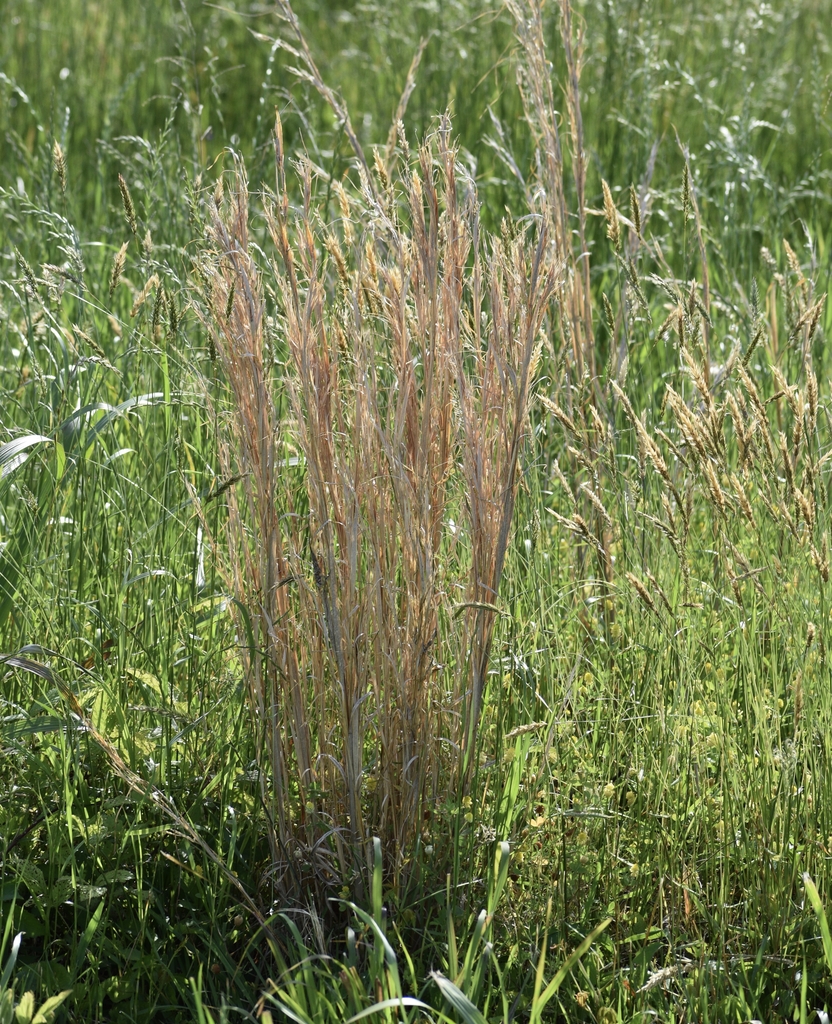
Broomsedge (Andropogon virginicus) in Warren County, NC by Cathy Dewitt CC BY-NC-ND 4.0
Plants and other autotrophs (organisms that make their own food) are the starting point for food webs. The autotrophs serve as food for the heterotrophs (consumers, like us). By having plants in your yard, you are providing the foundation for food webs, but plants native to your area are the best ecological choice. Animals, including mammals, insects, and birds, evolved with the plants native to the Carolinas so these plants are included in their search image. A search image is the prey items, plant or animal, that animals search for. It is just like when you go to the buffet. You don’t sample everything. You choose what fits your search image. Some animals can change their search image, while other species, especially insects, are specialists and have a search image of one or just a few plants. This applies to choosing plants for food, pollen/nectar, reproduction, and overwintering. Other animals are like me at the buffet, anything will do–except the beets.
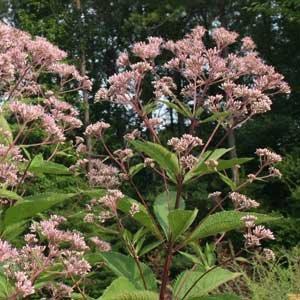
Bloom and leaf detail of Coastal Plain Joe-Pye-weed (Eutrochium dubium, formerly Eupatorium dubium). Photo by Debbie Roos CC BY 2.0.
Native animals and plants coevolved together
When you start to include non-native plants in the landscape, you reduce the food and habitat for native animals. Native animals and plants coevolved together. They are not likely to change their food and habitat choices quickly. This is like us; we don’t like change. Some animals may become rare or extinct when their preferred plant is not abundant. An example is the Bachman’s Warbler, which only nested in canebrakes. The bird is now considered extinct, in part because cane (Arundinaria sp.) stands have become so fragmented.
The native plants also benefit your wallet. Native plants placed in their preferred site conditions will require less water, fertilizer, and pesticides than non-native plants. I would not recommend fertilizer or pesticides for any plant in your yard; natives are built to thrive in the Carolina environment. Avoid the chemicals and just plant natives. Natives are more tolerant of the Carolina heat, humidity, fungi, and diseases. The deep roots of native plants, especially those adapted to dry conditions, hold soil in place and prevent erosion. The roots are more adapted to the soil fungi and bacteria that form relationships, called symbiosis, with the roots. The fungi and bacteria often help the roots obtain more nutrients, while fungi can assist with gathering water. In addition to slowing erosion, the plants also will absorb excess nutrients in the water. It is like having a natural water filter.
You can create your own bioreserve in your yard with native plants. The native plants support a larger number of larvae (such as caterpillars), but the plants are rarely completely consumed. More insect larvae on native plants means more birds, especially while they are nesting. Even seed-eating birds need to feed protein-packed larvae to their quickly growing chicks. The native plants are like the grocery store meat department for birds.
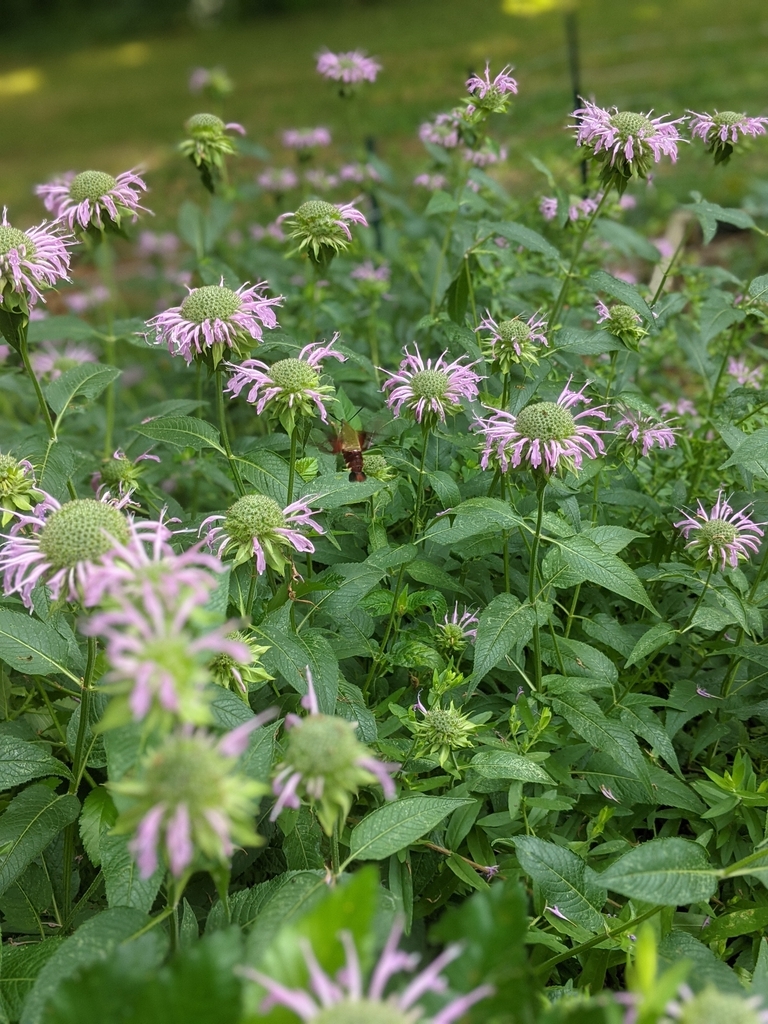
Moth visiting clusters of pink flowers on Appalachian Bergamot (Monarda fistulosa), July 2021, with Hummingbird Clearwing moth. Photo by Hope Duckworth CC BY 4.0.
Native plants provide habitat during migration
With proper planning, your native habitat can be connected to other habitats nearby. This is not always easy, but is a worthwhile endeavor. With the food and shelter provided by native plants, you can provide stopover habitat during migration. Your yard can be a migratory truck stop where animals can pull over, rest, and refuel. Many native plants are perennials or seed prolifically, so they may not require yearly planting. The seedheads can be left through the winter to provide seeds and a place for birds to forage for insects. Planting a variety of native plants provides a succession of color and texture through the entire growing season for you and a large buffet for the animals. Including native evergreens also contributes to winter shelter for the animals and a reminder that nature doesn’t die in the winter.
Beware of variegated plants. The color changes in variegation can alter leaf chemistry so the leaves are not as desirable to herbivores. This applies to flowers also. When unusual flower colors are selected, pollinators may be less likely to visit the flowers. The cultivars may be pleasing to the human eye, but the native animals are not a fan. Cultivars are engineered to satisfy human desires but not the wildlife palate. A better option is to choose plants native to your area that match the environment of your yard. In the long run, you and the butterflies will be happier with Purple Coneflower (Echinacea purpurea) than with Butterfly-bush (Buddleja spp.).
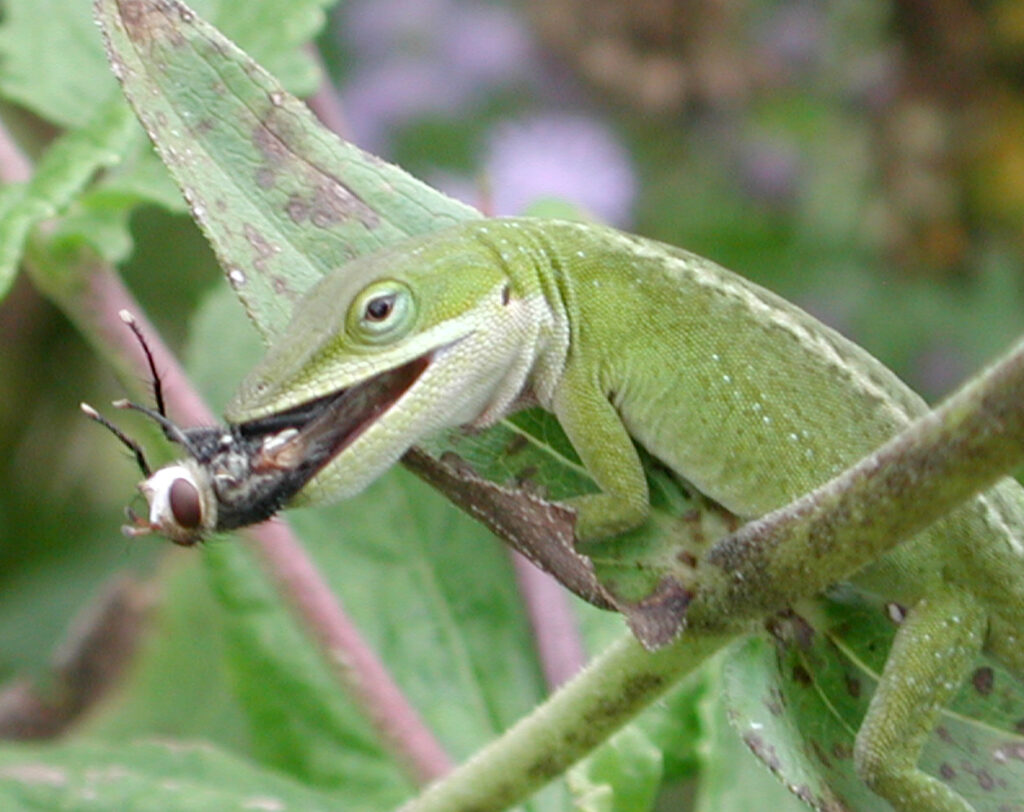
My neighbors are so excited about the number of butterflies and dragonflies coming from my yard, but I have not heard them rave about my natural rather than neatly manicured lawn. As I watch the anole stalking a pollinator in my backyard, I gloat a little and have some sympathy for my neighbors. I am sure that deep inside, they also want to be a nature nut and let their yard go native.
Robert Carter grew up exploring the Piedmont of South Carolina. He attended Clemson University (BS, MS) and Auburn University (PhD) to obtain degrees in forestry. His graduate research involved identifying landscape ecosystems using plants, soils, and landform in the mountains of North Carolina and the Longleaf Pine ecosystems of lower Alabama. After a career in academia, he moved back to South Carolina where he is the Outdoor Education Specialist with the Catawba Indian Nation. Robert is a frequent contributor to Native Plant News.