Bertram Whittier Wells with camera. University Archives Photograph Collection. People (UA023.024), Special Collections Research Center at NC State University Libraries, Raleigh, North Carolina.
Editor's Note
This guest essay by Nancy Anderson sets the stage for 75 years of work by the NC Native Plant Society to advance the importance of native plants. – Andrea Thunem, managing editor.
Early in its inception, the Society engaged in direct advocacy and hands-on action, and then built partnerships with state agencies, land trusts, and garden organizations. Today, advocacy is also stewardship.
Founded in 1951 as the North Carolina Wild Flower Preservation Society, the North Carolina Native Plant Society has spent nearly 75 years inspiring the conservation and appreciation of native plants and their habitats. Through education, habitat protection, and native plant propagation, the Society has evolved to meet North Carolina’s biodiversity challenges—and now proudly embraces advocacy as a vital part of its mission. This brief look at the history of American native plant advocacy highlights how our Society has emerged to champion these efforts for nearly three-quarters of a century.
Early influencers: The Bartrams, André Michaux, and B.W. Wells
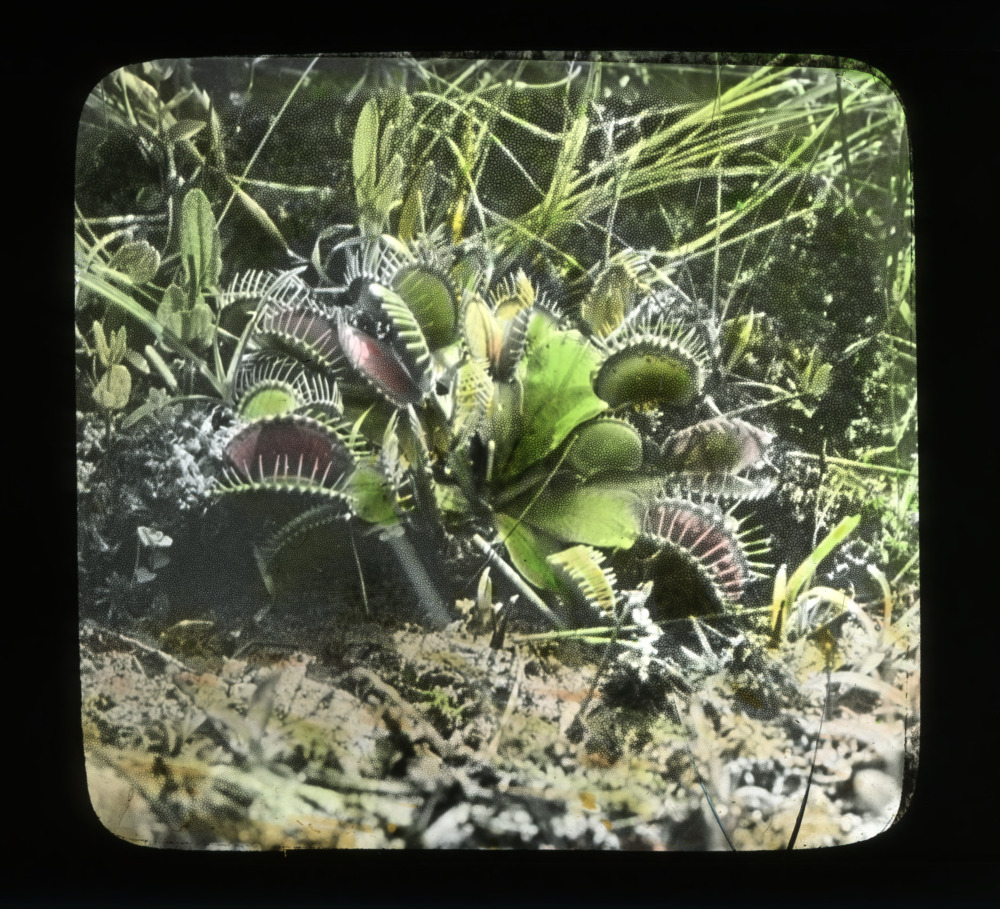
America’s fascination with native plants was inspired by Bartram’s Travels (1791), a book that describes how William Bartram and his father, John, introduced the Carolinas’ rich flora to the world. During their explorations, guided by knowledge from the Seminole, Cherokee, and Creek Nations, they gathered both seeds and stories that shaped early botanical science. In the late 1700s, the French botanist André Michaux also expanded this work with travels to collect plants in the Piedmont and mountains of the Carolinas. Consequently, magnolias, oaks, and other NC native species soon graced European gardens. Even Charles Darwin studied a Carolina native—the Venus Flytrap (Dionaea muscipula)—in his book Insectivorous Plants (1875).
Group of Venus' Fly-Traps ready for insect victims. Photo by B.W. Wells. B.W. Wells lantern slides (UA023.039), Special Collections Research Center at NC State University Libraries.
As public interest grew, the Torrey Botanical Society (founded in New York City in the 1860s) became the first lasting botanical organization in the Western Hemisphere. Then in the early 1900s, starting with the New England Wild Flower Society, women’s garden clubs in the Mid-Atlantic and South advanced native plant preservation through roadside beautification and education, often partnering with the Wild Flower Preservation Society of America (1902–1933). The latter society’s mission lived on through the Garden Club of America and later in efforts to establish community parks, sometimes with cultivated rare native species—paving the way for today’s native plant movement.
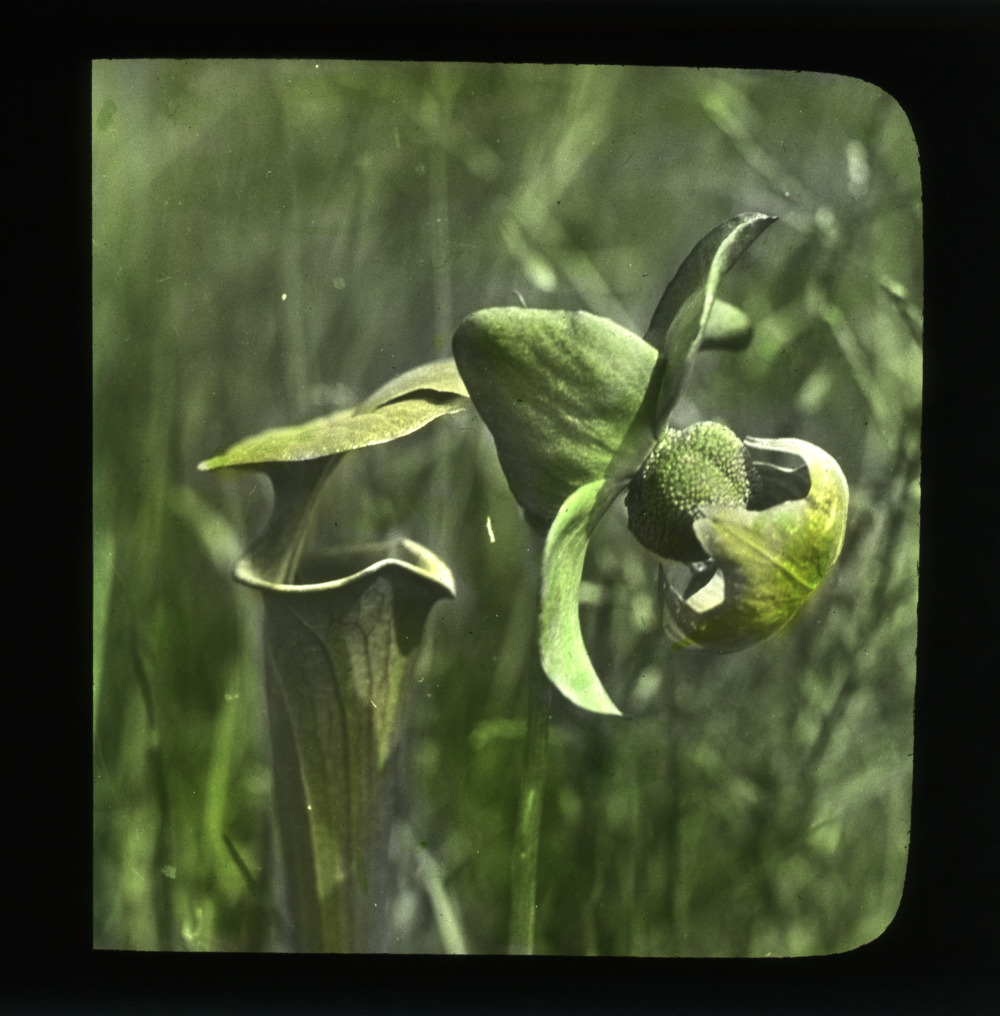
The Trumpet-flower or Yellow Pitcherplant (Sarracenia flava) stigma is noted for its size. Photo by B.W. Wells circa 1920-1932. B.W. Wells lantern slides (UA023.039), Special Collections Research Center at NC State University Libraries.
In the late 1920s, North Carolina’s garden clubs united around the vision of beautifying roadsides with native plants. The Newfound Gap Road through the Smokies (built from1928 to 1940) became an early model for such scenic, ecologically sensitive landscaping. By the 1930s, garden clubs were partnering with the NC State Highway Commission to plant azaleas, dogwoods, and Mountain Laurel along major routes, efforts that were inspired in part by the B.W. Wells book Natural Gardens of North Carolina (1932).
Mountain Laurel flowers. Photo by B.W. Wells. B.W. Wells lantern slides (UA023.039), Special Collections Research Center at NC State University Libraries.
This momentum culminated in the creation of our society, which started as the North Carolina Wild Flower Preservation Society, in 1951. Interestingly, its first campaign focused on protecting native evergreens by discouraging their excessive use as garlands for holiday decoration.
The Society soon grew, with biannual field meetings across the state—from mountains to coast—where members studied wildflowers in their natural habitats. In 1954, the Society advocated the use of native plants for highways (supporting the Garden Clubs’ Operation Wildflower), gathering wildflower seeds for roadside planting by the Highway Department (NPN, 1976). Even before Rachel Carson’s 1962 publication of her groundbreaking book, Silent Spring, with an overriding theme of the adverse actions humans were having on the natural world, the Society was already having a positive impact through three types of advocacy strategies.
Our Society turns awareness into action
Advocacy Strategy 1: Advocate for Native Plants with Action
From its earliest years, the Society has advanced conservation through direct advocacy and hands-on action. In the 1960s, members supported the Highway Beautification Act of 1965 and engaged in long-term efforts—letters, visits to Washington, and continued advocacy—that helped prevent construction of the damaging Trans-Mountain Road along Lake Fontana’s north shore, finally halting it in 2010 after environmental studies confirmed its risks. Then starting in the 1970s, when nurseries sold wild-collected plants like the Pink Lady’s Slipper (Cypripedium acaule), members promoted propagation and organized plant rescues ahead of development projects, such as at B.W. Wells’s Rock Cliff Farm (later flooded by Falls Lake).
A pair of pink ladies’ slippers. Photo by B.W. Wells created circa 1920 to 1932. B.W. Wells lantern slides (UA023.039), Special Collections Research Center at NC State University Libraries.
Such rescues continued, for example when a new road was to be constructed on Roanoke Island (2007). By the 1980s, advocacy expanded through education, fostering awareness, and networks for protecting endangered and threatened species. Subsequently, in the 2000s, the Society increasingly educated the public about invasive species—from Kudzu and Tree-of-heaven to Japanese Knotweed, Multiflora Rose, and many others—by highlighting their ecological impacts and promoting native alternatives. (See NatureServe Ranks Impacts of Exotic Plants, by Misty Franklin, Native Plant News September/October 2006, page 16.) Thus, through persistent advocacy, rescue, and education, the Society has consistently turned awareness into action for the preservation of North Carolina’s native plants and habitats.
Advocacy Strategy 2: Build Partnerships
Collaborative partnerships have been central to advancing native plant conservation. The Society has worked with state agencies, land trusts, and garden organizations to protect rare species and restore native habitats. For example, following the 1979 Plant Conservation Act—which left rare plants vulnerable on private lands—the Society supported the NC Plant Conservation Program’s Rare Plant Initiative, establishing land acquisition efforts for endangered flora. Also, in 2002, a collaboration with the NC Department of Transportation explored using native plants and grasses to reduce roadside maintenance costs while improving habitat quality.
A moment in the life of Turk's-cap Lily. Photo by B.W. Wells. B.W. Wells lantern slides (UA023.039), Special Collections Research Center at NC State University Libraries.
Several partnerships have continued to grow—from celebrating the Daniel Boone Native Gardens’ 50th anniversary with the Garden Club of North Carolina in 2013, to setting aside valuable land along the Uwharrie River in 2018 with the Land Trust for Central North Carolina and volunteering with stewardship projects like Catawba Wildflower Glen (2021). Most recently, a revised Invasive Plants List was developed with NCNPS conservation partners including representatives of the NC Natural Heritage Program, USDA Forest Service, NC Botanical Garden, NC Department of Agriculture & Consumer Services, and the NC Invasive Plant Council, to strengthen advocacy by promoting habitat restoration through the removal of invasive species to allow for reintroduction of natives. (See Chlorofiends! An Invasive Plants List at Last! By Lisa Lofland Gould, Native Plant News Spring 2024.)
Advocacy Strategy 3: Recognize Success
Celebrating achievement strengthens advocacy and inspires continued conservation. Towards these goals, the Society honors individuals and organizations that advance native plant awareness through research, discovery, and stewardship. NCNPS’s B.W. Wells Grants have supported student research studies; for example, on native plant germination, coastal inventories, and the effects of highways on lichens. Also, members’ accomplishments, such as Mark Rose’s discovery of Rose’s Heartleaf (Hexastylis rosei = formerly Asarum rosei) (2017), have highlighted the value of local expertise. The Society also showcases outstanding books, field trip destinations like the vertical bog formed on a rock face created by construction across from the Wolf Mountain Overlook on the Blue Ridge Parkway, and collaborations with partners such as the NC Botanical Garden and the Garden Club of America, which, for example, recognized our native vine, Dutchman’s Pipe (Aristolochia macrophylla), as a 2019 Plant of the Year.
Our mindset is stewardship
As we continue to advocate with action, the building of partnerships, and the recognition of success, the North Carolina Native Plant Society is also moving beyond conservation and advocacy towards native plant and habitat restoration with a stewardship mindset. This is something to celebrate as we approach our Society’s 75th Anniversary in September 2026!
Nancy Anderson lives with her husband, Trevor, in Sapphire, NC. She is a founding member and outgoing Chair of the Oconee Bell Chapter. As beekeeper, certified Transylvania County Master Gardener, and Purdue University Professor Emerita of Biology, she spends most of her time outdoors converting their mountain-view property into a native plant haven where people can enjoy the insects, birds, and other wildlife.