The B.W. Wells Stewardship Fund
A History of Community Conservation Through NCNPS
Unlike the Shinn Grants, which focus on supporting scientific research, the B.W. Wells Stewardship Fund represents NCNPS’s commitment to hands-on conservation, habitat restoration, and public education. The newsletters show that the Wells Fund emerged as the Society increasingly sought ways to move conservation from research and advocacy into communities, parks, schools, neighborhoods, and public landscapes. (North Carolina Native Plant Society)
Origins: Honoring B.W. Wells
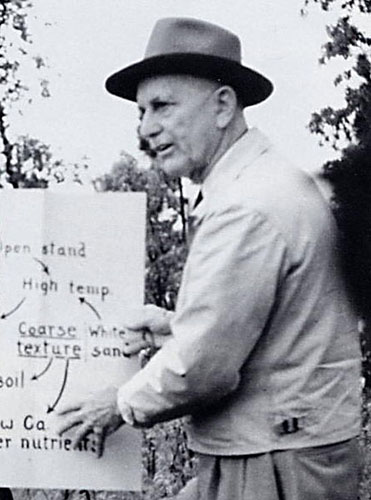
The fund is named for Bertram Whittier Wells, one of North Carolina’s pioneering plant ecologists and author of The Natural Gardens of North Carolina (1932). Wells advocated for understanding and protecting North Carolina’s natural plant communities long before ecology became a widely recognized discipline. The fund was established through a donation from his wife, Maude Wells, creating a lasting conservation legacy within NCNPS. (North Carolina Native Plant Society)
The choice of Wells as namesake is significant. Whereas many conservation programs focus on individual species, Wells emphasized plant communities and ecosystems, a philosophy that strongly influenced the grant program’s later direction. (North Carolina Native Plant Society)
Early Years: Small Grants, Local Impact
The earliest newsletter references suggest the Wells Fund was designed to support projects that:
- Installed native plant gardens
- Restored degraded habitats
- Removed invasive species
- Educated the public about native plants
- Demonstrated conservation practices in community settings
Unlike the Shinn Grants, recipients were generally organizations rather than students. Schools, local governments, community groups, land trusts, neighborhood associations, and conservation organizations became the primary beneficiaries. (North Carolina Native Plant Society)
The program’s philosophy was simple:
Help local people improve local habitats.
First Generation of Projects (2000s–Mid 2010s)
The newsletters indicate that early Wells-funded projects concentrated on three recurring themes:
Native Plant Demonstration Gardens
Many grants supported highly visible public gardens intended to:
- Showcase native species
- Teach visitors about ecological landscaping
- Encourage homeowners to use native plants
The emphasis was on demonstration and education rather than large-scale restoration.
Invasive Species Removal
As invasive plants became a growing concern within NCNPS, Wells grants increasingly supported:
- Privet removal
- English ivy control
- Wisteria removal
- Woodland restoration
These projects represented a shift from simply planting natives to actively restoring ecological integrity.
Community Engagement
Projects often involved:
- Volunteers
- School groups
- Scout troops
- Neighborhood organizations
The newsletters repeatedly emphasize community participation as a conservation goal in itself.
A Turning Point: Urban Restoration Projects
One of the earliest well-documented recipients was the restoration of natural areas in Latta Park in Charlotte.
In 2016, volunteers working through the Dilworth Community Association used a Wells grant to begin removing invasive species and planting native trees and shrubs along a stream corridor. Project leaders later credited the Wells grant with helping launch a restoration effort that continued for years. (North Carolina Native Plant Society)
The Latta Park project illustrates a broader evolution in the fund:
Earlier Projects
- Install gardens
Newer Projects
- Restore ecosystems
This distinction became increasingly important as the program matured.
Expansion into Habitat Restoration (Late 2010s–2020s)
By the 2020s, newsletter coverage reveals a more ambitious grant portfolio.
Projects increasingly focused on:
- Floodplain restoration
- Bottomland forest restoration
- Wetland enhancement
- Pollinator habitat creation
- Stormwater management
- Ecological education
The Wells Fund became NCNPS’s primary mechanism for supporting grassroots conservation projects across North Carolina. (North Carolina Native Plant Society)
Thematic Evolution of Wells Grants
Phase 1: Demonstration Gardens
Core Question
How do we show people the beauty of native plants?
Typical Projects:
- School gardens
- Community gardens
- Pollinator gardens
- Educational signage
Phase 2: Habitat Stewardship
Core Question
How do we improve degraded sites?
Typical Projects:
- Invasive species removal
- Native plant installation
- Stream corridor restoration
- Woodland rehabilitation
Phase 3: Ecological Restoration
Core Question
How do we restore ecosystem function?
Typical Projects:
- Wetland enhancement
- Floodplain restoration
- Prescribed burns
- Prairie management
- Bottomland forest recovery
Phase 4: Community-Based Conservation
Core Question
How do we build conservation leadership?
Typical Projects:
- Volunteer training
- Educational workshops
- Community science
- Public interpretation
- Youth engagement
Notable Projects Featured in Newsletters
Chantilly Ecological Sanctuary (Charlotte)
A 2021 grant supported restoration of a floodplain wetland system through installation of native plants, educational signage, and habitat enhancements designed to improve water quality and wildlife habitat. (North Carolina Native Plant Society)
Significance
Demonstrates the fund’s shift toward ecosystem services and urban ecological restoration.
Cary Tree Archive Pollinator Garden
The Wells Fund helped establish a large pollinator garden along a public greenway using hundreds of native perennials and shrubs. The project inspired nearby residents to begin creating their own native habitats. (North Carolina Native Plant Society)
Significance
Illustrates the fund’s continuing commitment to public education through visible demonstration landscapes.
Foothills Conservancy Bottomland Forest Restoration
A Wells grant helped restore a former field along the Henry Fork River to bottomland forest habitat with assistance from local volunteers and youth groups. (North Carolina Native Plant Society)
Significance
Represents one of the fund’s strongest examples of landscape-scale restoration.
City of Creedmoor Native Plant Garden
A highly visible public garden at the community center transformed an unused landscape into an educational native plant display. (North Carolina Native Plant Society)
Significance
Demonstrates the fund’s success in bringing native plants into municipal settings.
Unity Park Community Garden
Wells funding expanded a native plant and pollinator garden from roughly 50 species to nearly 90 species while supporting tours and educational programs. (North Carolina Native Plant Society)
Significance
Combines conservation, education, and community engagement.
Growth in Popularity
Recent newsletters describe the Wells Fund as one of NCNPS’s most popular grant programs and note that applications frequently exceed available funding. The Society has repeatedly used fundraising campaigns to strengthen the fund and expand the number of projects it can support. (North Carolina Native Plant Society)
This growth reflects broader public interest in:
- Native plants
- Pollinator conservation
- Ecological landscaping
- Habitat restoration
- Community stewardship
Wells Fund vs. Shinn Grants
| B.W. Wells Stewardship Fund | Tom & Bruce Shinn Grants |
| Community organizations | Students and researchers |
| Habitat restoration | Scientific research |
| Demonstration gardens | Academic studies |
| Public education | Conservation science |
| Volunteer projects | University projects |
| Immediate on-the-ground impact | Long-term knowledge generation |
Together, the two programs form complementary pillars of NCNPS conservation efforts.
Historical Significance
The newsletters reveal that the Wells Fund represents an important evolution in the Society’s conservation philosophy.
Early NCNPS
“Teach people about native plants.”
Shinn Program
“Support research on native plants.”
Wells Fund
“Help communities actively restore native habitats.”
In many ways, the Wells Fund is the practical expression of NCNPS’s mission. Through hundreds of volunteers, community groups, schools, municipalities, and conservation organizations, it has translated native plant appreciation into visible conservation action across North Carolina. The program embodies B.W. Wells’s belief that understanding natural communities should ultimately lead to their stewardship and protection. (North Carolina Native Plant Society)