By Robert Carter reporting for Native Plant News Summer 2026
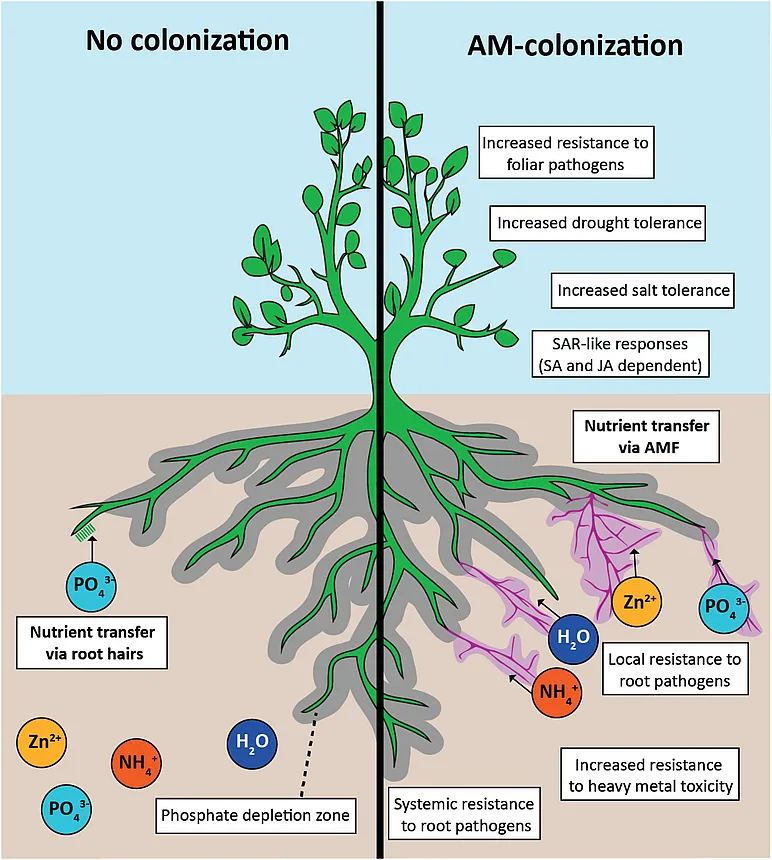
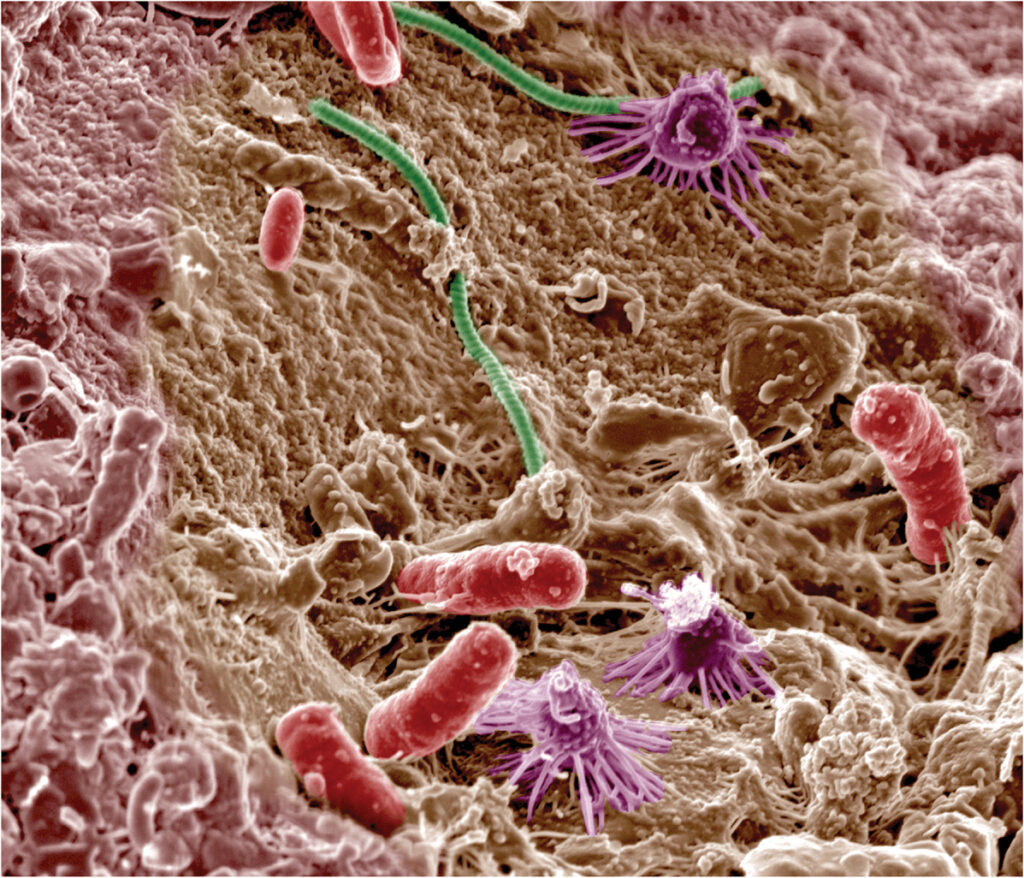
Beneath your feet is an example of cooperation and conflict similar to human society; maybe we should follow their example. Plant roots, invertebrate animals, bacteria, nematodes, archaea, and fungi are all competing and cooperating, creating a highly integrated soil social system, sometimes called soil ecology. The billions of bacteria and yards of fungi in just a teaspoon of soil are part of a complex nutrient cycling process moving material from soil to bacteria/fungi to roots and then back to soil. This amazing waltz makes it possible for you to have beautiful native plant gardens and those summertime vegetables.
The soil biota contribute to the physical and chemical properties of soil. As organic matter is digested by soil biota, it gets stored in the body of organisms and later stored in the soil. This sequesters carbon and other elements and molecules, which enriches the soil fertility and alters the soil pH and structure. The components of organic matter that are most difficult to break down are called humic and contribute to the dark color of topsoil. This is where much of the soil carbon is stored. Through time, the organic matter will slowly decay and release organic acids. This lowers the soil pH which impacts chemical reactions and nutrient absorption.
Soil texture is the percentages of sand, silt, and clay particles in the soil. Although the soil microbiota don’t change soil texture, they do impact the arrangement of the soil particles. The invertebrate animals tunnel through the soil, increasing porosity and water infiltration, while the exudates from their bodies hold soil particles together, contributing to soil structure. Similarly, roots in the soil create tunnels that are filled by air and water when the roots die. While alive, the roots secrete some organic matter that contributes to soil fertility and soil structure, but the roots also host soil microorganisms that secrete organic by-products. The overall result is a reduction in soil density but increased porosity and soil aggregation (structure). The organic compounds from the roots and soil biota act like glue holding soil particles together.
The organic component of soil has a negative charge which impacts the cation exchange capacity (CEC). CEC is a measure of the ability of a soil to hold atoms with a positive charge, such as Calcium (Ca), Potassium (K), and Magnesium (Mg). This is like static electricity on the soil. As microbes slowly break down organic matter, it provides slow-release fertilizer of Ca, Mg, and K, which are then held in the soil organic component.
More resilient soils
All of this biological activity in the soil can be determined by measuring soil respiration. This is not respiration with the lungs, but a measure of soil microbe metabolism. When cells are active, they release CO2. This is also why humans exhale CO2, so you have something in common with soil microbes. The higher the CO2 levels in the soil, the greater the soil biota activity. A higher respiration rate will be found in healthy soils with a diversity of biota. Soils with diverse soil biota are more resilient and better able to endure disturbances and droughts.