By Bettina Darveaux reporting for Native Plant News Winter 2025
Ah!!! That wonderful, lasting feeling of reconnecting with nature, with plants, with beautiful natural areas, and with those who also share the same excitement for our botanical world, has happened again. You guessed it – yes, I just got back from this summer’s Cullowhee Native Plant Conference (aka the Whee!!!) and I feel so renewed. I have been attending the conference, hosted by Western Carolina University (WCU), for over 10 years and yet each time it is such a fresh experience.
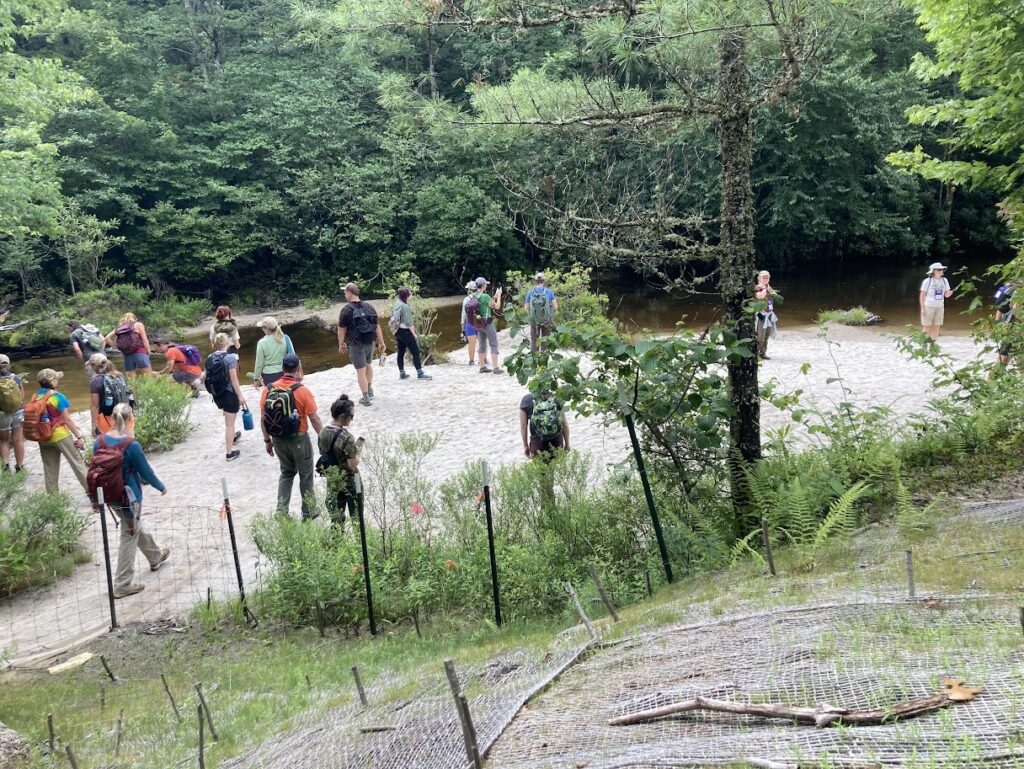
Wonderful vendors, workshops, field trips, and lectures
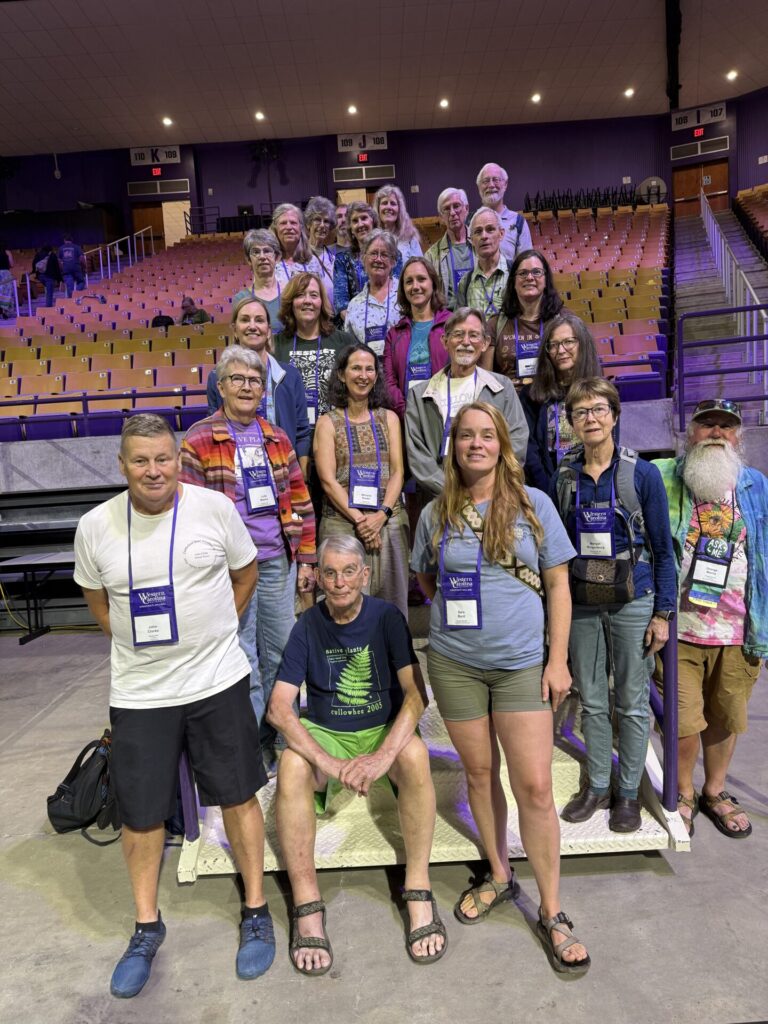
The conference planning committee does such a wonderful job of having a variety of awesome speakers, really fun and engaging workshops, and field trips to special places. The main arena of WCU’s Ramsey Center is filled with beautiful native plants for sale from native plant nurseries across the Southeast, with books, puzzles, and other nature inspired gifts from City Lights Bookstore in nearby Sylva, North Carolina, and artists selling their botanical pieces, artwork, notecards, and more. Our own North Carolina Native Plant Society (NCNPS) member, John Clarke (Cumberland Road Woodturning), was one of the vendors selling his beautiful wooden creations.
If I can be so filled with botanical bliss from attending this conference after so many years, can you even imagine those who are attending for the first time!! The North Carolina Native Plant Society, along with other sponsors, donates funds each year to WCU to provide sponsorships to students and young professionals across the Southeast to attend the Whee. And what a great experience it is for these recipients who are beginning their careers in a native plant-related field. The NCNPS sponsorship recipients from North Carolina this year included: Christine Miller, Bella Winkler, Vee Carter, Justin Bateman, Annina Rusila-Platt, Kelly Creedon, Evan Villani, and Allasha Roth.
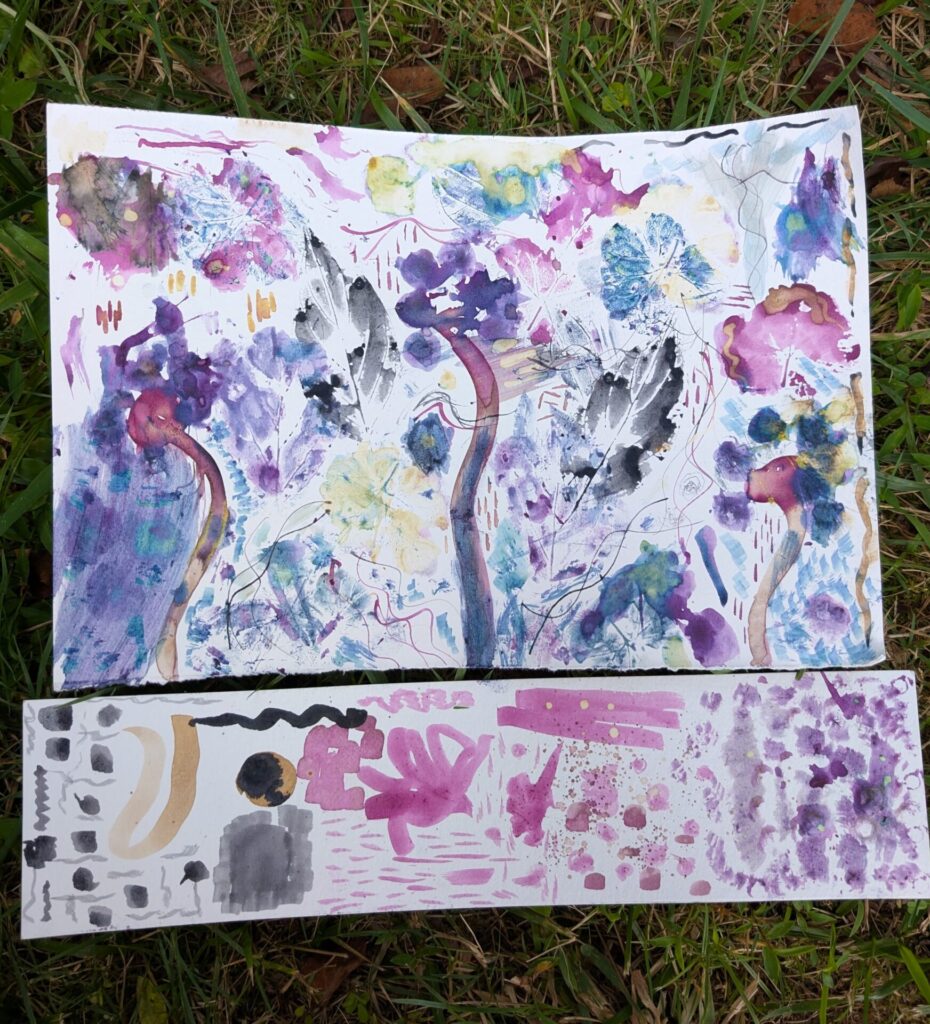
Allasha Roth, who is a senior at the University of North Carolina at Charlotte studying environmental science and ecology, wrote, “Attending this conference was invaluable in expanding my understanding of the role native plants have in conservation and restoration. In addition to the many dynamic and informative plenaries, I was also able to attend a few workshops where I was able to learn about native plants from Indigenous and artistic perspectives.”
“The whole experience left me very refreshed, and I met some wonderful people!” said Evan Villani, a recent graduate from North Carolina State University and a current horticulturist at the JC Raulston Arboretum. Evan remarked how the conference taught him more about utilizing native plants in a design capacity. “I was inspired by the way other people approach designs, as well as the level of planning that comes with larger projects.”
Christine Miller is a new horticultural technician at the Coker Arboretum at The University of North Carolina at Chapel Hill, who “now desperately wants to design and install a native prairie!” She was inspired by both Annabel Renwick’s presentation on managing a native prairie at Sarah P. Duke Gardens at Duke University, as well as Malcolm Vidrine’s presentation on creating the Cajun Prairie Gardens in his front yard in Louisiana. Christine commented on just how much thought and time goes into those projects.
With the opportunity from her sponsorship, Annina Rusila-Platt was so grateful to “….attend, network and learn, but also to share and talk about the garden I designed as a part of my internship at the Asheville Botanical Gardens, during the poster exhibit.” (See featured image.)
In this time of immense habitat loss and climate change, the understanding of the interdependency of life is being realized and people are becoming more concerned about our planet’s health. Conservation at the ecosystem level is our only hope for success and I believe this next generation of scientists, our students, are especially embracing this. The field trips and presentations have taken a broader scope at the Cullowhee conference recently by including fungi, insects, and birds because one cannot really talk about native plants or any one species in isolation. Native plants are the producers in the ecosystem that drives all other life. All of life’s complex and intricate relationships would not be, if it were not for the energy inputs from our native plants and their coevolution with other life forms who are dependent upon them.
Your donation helps students go to Whee
It is your donations to NCNPS that allows these students and young professionals to foster their excitement and love of all things native plant. At the Whee, they learn so much, make connections with other plant professionals, become encouraged, generate new ideas, and discover what their next (green) path forward might be. What a nice way to welcome this next generation of botanists into our native plant community that we all know is just so special! We thank you.

Bettina Darveaux is a retired plant biologist (MS in Environment and Forest Biology from SUNY College of Environmental Science and Forestry) with a lifelong curiosity and passion for native plants and conservation. A naturalist at heart, she enjoys “botanizing,” gardening, hiking, kayaking, bird watching, nature photography, camping, and just about any recreation that brings her outside, especially to the mountains of NC. She currently manages the Plant Gallery database.